Quick answer: Aida is woven in blocks with an obvious hole at each corner, so every stitch position is visible. Evenweave and linen have no blocks, so you count fabric threads and usually stitch over two. They give a softer, finer finish and are considerably less forgiving to learn on.
People ask about this once they have a few pieces behind them and start wondering what the fuss is. It is a real difference, and it is smaller than the internet suggests.
What each one is
Aida is woven from bundles of threads grouped into blocks, with a clear hole at each corner. One block, one stitch. You can see exactly where everything goes.
Evenweave is a single-thread weave with the same number of threads per inch in both directions. No blocks. You count threads and normally work each stitch over two of them.
Linen is evenweave made from flax. Same counting method, but the threads are slightly irregular in thickness, which is what gives it that antique character.
The count confusion
This trips everybody up, so it is worth being clear.
Because you stitch over two threads on evenweave, 28-count evenweave gives you exactly the same stitch size as 14-count aida.
So the rough pairs are: 28-count evenweave equals 14-count aida, 32-count equals 16-count, and 25-count equals roughly 12 or 13. The aida count guide covers the aida side.
Side by side
| Aida | Evenweave / linen | |
|---|---|---|
| Stitch placement | Obvious | Counted from threads |
| Fractional stitches | Must pierce the block | Real hole already there |
| Drape | Stiff | Soft |
| Finished look | Crisp, modern | Softer, traditional |
| Forgiveness | High | Lower |
| Price | Lower | Higher |
Where evenweave genuinely wins
Two places, both real.
Fractional stitches. On aida you have to pierce through the middle of a block. On evenweave the halfway point is already a hole, because you are working over two threads. If a design is heavy with fractionals, this matters a great deal — see the fractionals guide.
Anything that needs to drape. Table linen, a sampler that hangs unframed, anything you want soft rather than board-stiff.
Where aida wins
Everywhere else, honestly, and particularly while you are learning.
Every stitch position is visible, which removes an entire category of error. It is cheaper, it is what nearly every kit supplies, and it holds its shape in a hoop better.
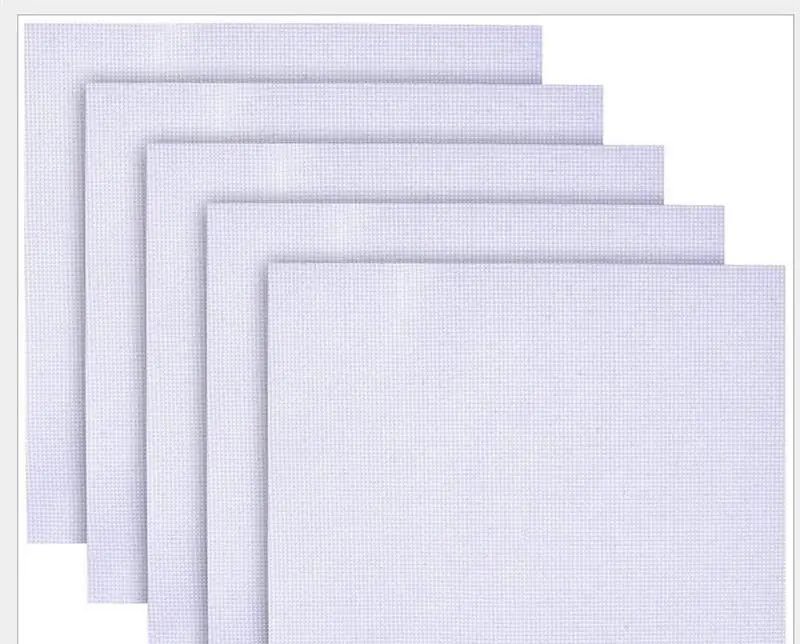
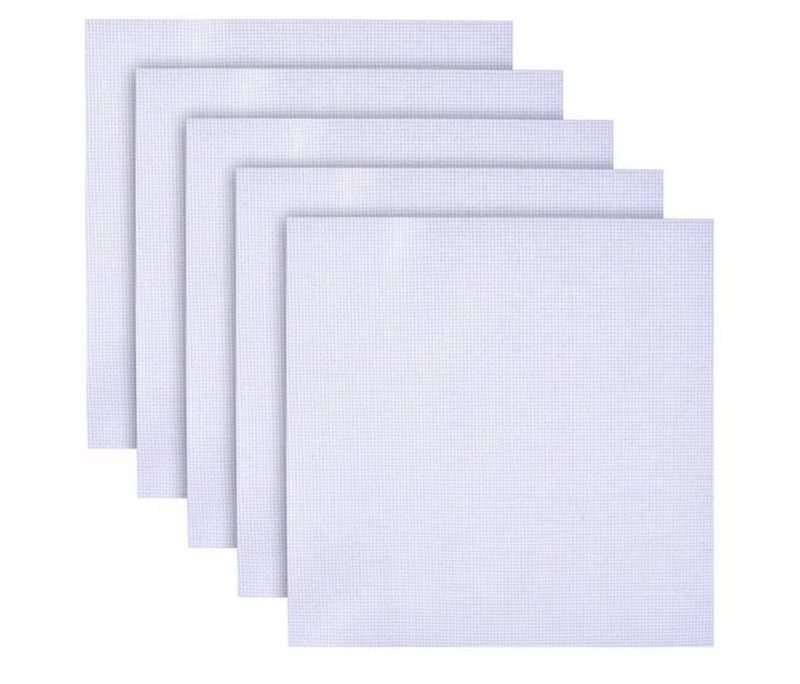
There is a good spread in the aida range, and the mixed-count sheet pack is the cheap way to find what suits you. The white five-sheet pack is the standard.
The snobbery, addressed
You will meet people who treat linen as the real thing and aida as the training version.
Ignore that. Aida is a purpose-designed fabric that does its job extremely well, and a beautifully worked piece on 14-count aida beats a strained one on 32-count linen every time.
Move to evenweave when a project gives you a reason — heavy fractionals, or something that needs to drape. Not because somebody implied you should.
If you do try it
Go one step at a time. Try 28-count evenweave first, which matches the stitch size you already know, so only the counting method changes.
Tack a grid, because you cannot rely on visible holes to keep your place. Every ten stitches, which is twenty fabric threads — the marking pen or a loose tacking thread will do it, and the miscount guide explains why gridding matters more here than anywhere.
Evenweave frays more, so bind or tape the edges before you start, and expect to wash and block it more carefully than aida. And the supplies guide covers the rest of what you need from patterns and supplies.
The short version
- Aida is woven in blocks with visible holes; evenweave and linen are counted from threads.
- Stitching over two threads means 28-count evenweave equals 14-count aida in stitch size.
- Evenweave wins on fractional stitches and anything that needs to drape.
- Aida wins on visibility, price, availability and holding its shape in a hoop.
- Move to evenweave when a project gives you a reason, not because someone implied you should.
Frequently asked questions
What is the difference between aida and evenweave?
Aida is woven from bundles of threads grouped into blocks with a clear hole at each corner, so every stitch position is visible. Evenweave is a single-thread weave with no blocks, so you count fabric threads and normally work each stitch over two.
What evenweave count matches 14-count aida?
Twenty-eight count. Because you stitch over two fabric threads on evenweave, 28-count produces exactly the same stitch size as 14-count aida. Similarly, 32-count evenweave matches 16-count aida, and 25-count sits around 12 or 13.
Is linen better than aida for cross stitch?
Not better, different. Linen gives a softer, more traditional finish and handles fractional stitches more easily, because the halfway point is already a real hole. Aida is cheaper, far more forgiving and holds its shape better in a hoop.
Why are fractional stitches easier on evenweave?
Because you are already working each stitch over two fabric threads, so the point halfway across is a genuine hole. On aida you must pierce through the middle of a woven block, which takes more care and slightly more force.
Should a beginner try evenweave?
Not to start with. Every stitch position on aida is visible, which removes a whole category of counting error while you are learning. Move to evenweave when a project gives you a genuine reason, such as heavy fractional work.