Quick answer: Aida count is the number of stitches per inch of fabric. Fourteen-count is the standard and suits almost everybody. Eleven-count is bigger and kinder on the eyes, sixteen and eighteen are finer and produce more detail in a smaller finished piece. Count changes size and comfort, never difficulty.
Twenty-two years behind a haberdashery counter and I could set my watch by this question. Someone would come in holding a chart, look at the fabric shelf, and go quiet.
So here is the answer I gave several thousand times.
What the number actually means
Aida is woven in little blocks with a clear hole at each corner. The count is how many of those blocks fit into one inch.
Fourteen-count means fourteen stitches per inch. Eighteen-count means eighteen stitches squeezed into the same inch, so each one is smaller.
That is it. The number is not a difficulty rating and it is not a quality rating. It is a size.
What changes when the count changes
| Count | Stitch size | Best for |
|---|---|---|
| 11-count | Large, obvious holes | Children, tired eyes, quick projects |
| 14-count | The standard | Almost everything, and almost everyone |
| 16-count | Noticeably finer | More detail without going tiny |
| 18-count | Fine | Portraits, detailed pieces, good light |
Most kits you will meet are on 14-count, which is why our beginner kits use it almost without exception.
The bit that catches people out
Change the count and you change the finished size. The same chart worked on 11-count comes out noticeably larger than on 18-count.
The sum is simple. Divide the stitch count by the fabric count. A design 140 stitches wide on 14-count is ten inches. The same design on 18-count is under eight.
Worth doing before you buy a frame. It is also why swapping fabric on a large kit can quietly change what will fit on your wall.
Which one should you buy
Fourteen, unless you have a reason not to. That is what nearly every kit in the main kit range is supplied on.
Go to 11-count if you are stitching with a child, if your eyesight is not what it was, or if you want something finished quickly. Our kids' kits lean this way for good reason.
Go to 16 or 18 when you want more detail in a piece that will not dominate a wall. It is not harder to stitch — the stitches are just smaller, so you need decent light and probably a magnifier.
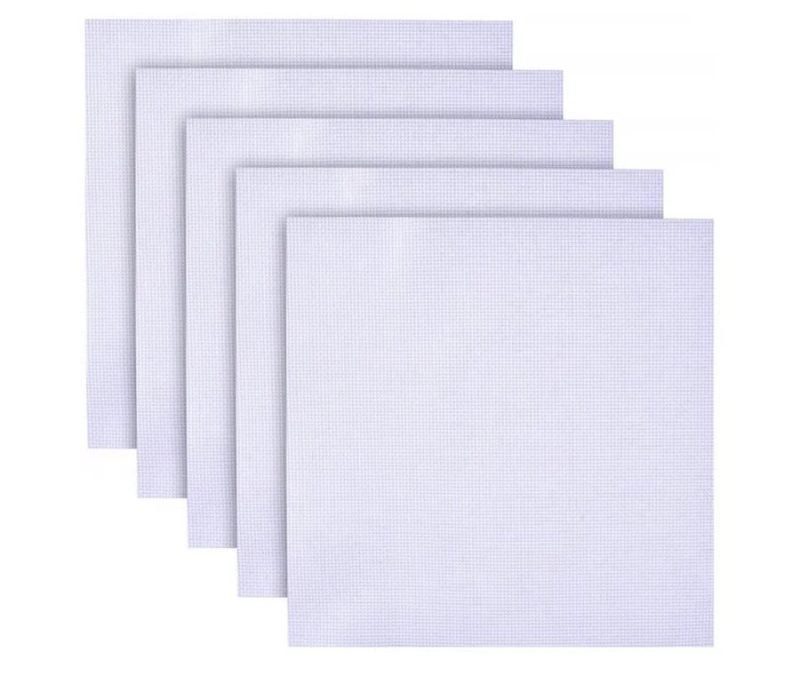
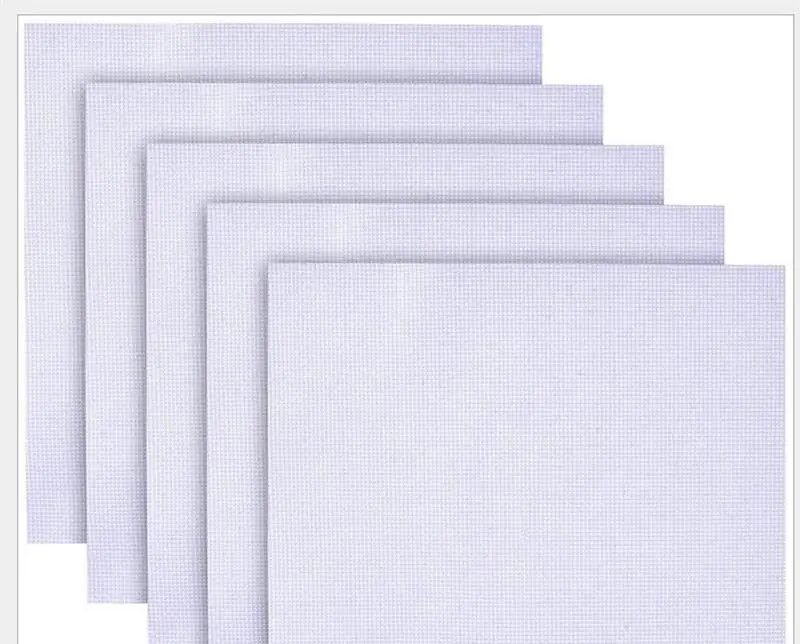
The aida fabric range covers the usual counts, and the mixed-count sheet pack is the cheapest way to find out what you actually get on with.
Let me talk you out of something
People assume higher count means better work. It does not.
A neat, even piece on 14-count looks far better than a strained, uneven one on 18. If you are squinting, you are not enjoying it, and it shows in the stitching.
The Royal School of Needlework, which has taught hand embroidery since 1872, puts good light and comfortable working position ahead of almost everything else Royal School of Needlework. That advice holds here.
Strands, briefly
Count also changes how many strands of floss you use. Two strands on 14-count is the usual, three on 11-count, one or two on 18.
Too few and the fabric grins through. Too many and the stitches bully each other. The supplies guide goes further into this, and the threads and floss range covers what you need.
Other fabrics, in one paragraph
Aida is not the only option. Evenweave and linen have no blocks, so you count threads rather than holes and usually stitch over two of them.
They give a softer, more traditional finish. They are also less forgiving, so I would not start there. Printed and stamped kits sidestep counting entirely if that appeals, and the counted versus stamped guide compares the two properly. Traditional samplers are where you most often meet linen.
Buy 14-count. Stitch on it happily for years. Change only when a project gives you an actual reason to.
The short version
- Aida count is stitches per inch, not a difficulty or quality rating.
- 14-count is the standard and the right default for almost every stitcher.
- Changing the count changes the finished size: stitch count divided by fabric count equals inches.
- Use 11-count for children or tired eyes; 16 and 18 for more detail in a smaller piece.
- Higher count is not better work. A neat piece on 14-count beats a strained one on 18.
Frequently asked questions
What does 14-count aida mean?
It means fourteen stitches fit into one inch of fabric. The weave forms small blocks with a clear hole at each corner, and you work one cross stitch over each block. Fourteen-count is the industry standard and what the large majority of kits are supplied on.
Does a higher aida count make cross stitch harder?
No, only smaller. The stitch itself is identical at every count. What a higher count demands is better light and steadier eyes, because each stitch covers less fabric. Many people find 16-count perfectly comfortable and 18-count fine with a magnifier.
How does aida count change my finished size?
Divide the design's stitch count by the fabric count to get inches. A chart 140 stitches wide measures ten inches on 14-count but under eight on 18-count. Always run that sum before buying a frame or committing to a wall space.
How many strands of floss should I use on 14-count aida?
Two strands is the standard for full cross stitches on 14-count, and one strand for backstitch outlines. On 11-count you will usually want three, and on 18-count one or two. If the fabric shows through your stitches, add a strand.
Is aida better than evenweave or linen?
Not better, just easier. Aida's blocks and clear holes tell you exactly where every stitch goes. Evenweave and linen have no blocks, so you count fabric threads instead, usually working over two. They give a softer finish but are less forgiving to learn on.