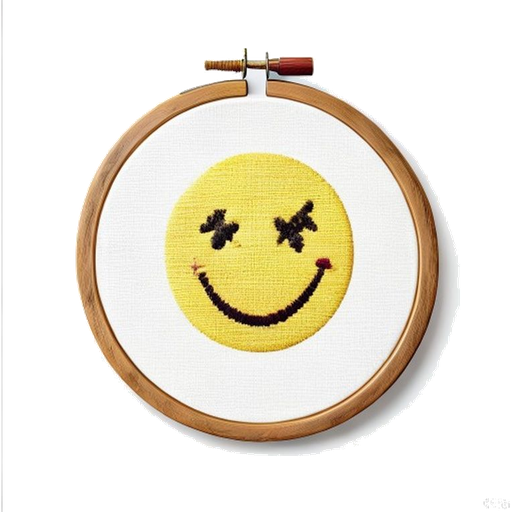
Quick answer: Cross stitch for mental health works because its slow, repetitive rhythm calms the nervous system, holds your attention in the present moment, and ends in a finished object you made yourself. It is a form of active meditation that keeps hands busy and the mind quiet, which is why so many people turn to it in hard seasons.
Key points
- Repetitive handwork occupies attention without demanding decisions.
- A visible row of progress gives a reliable small reward.
- It replaces screen time with something you can hold.
- Finishing a piece produces a genuine, earned sense of completion.
Eight years of a Manchester marketing job left me answering emails in my sleep. When burnout finally stopped me, I could not read a book, could not sit still, could not switch the noise off. A friend posted a beginner's kit through my door with a note that just said "try it". I did not expect much. Two rows in, something in my chest loosened for the first time in months. This is not a claim that thread fixes everything, because it does not. But cross stitch for mental health is one of the gentlest, most quietly effective things I have ever found, and there is decent reason behind why it works.
Cross stitch for mental health: the calm is in the repetition
The heart of it is rhythm. Up, cross, down, count, repeat. That steady loop gives an anxious mind a rail to hold, the same way pacing or kneading dough does, and it slows the breath without you trying.
Psychologists call this behavioural activation, doing a small manageable thing when your instinct is to do nothing, and it is one of the practical building blocks the NHS lists for lifting low mood NHS, five steps to mental wellbeing. A cross stitch chart breaks an overwhelming feeling into ten stitches you can absolutely manage. Then ten more.
Flow: the state where worry cannot reach you
There is a sweet spot in any absorbing craft where the task is just hard enough to hold you but not so hard it frightens you. Time softens. The endless mental commentary goes quiet. Psychologists call it flow, and cross stitch drops you into it more reliably than almost anything, because counting demands just enough of your attention to crowd the worry out.
That is the bit I felt on that first evening. Not happiness exactly. Just a merciful pause in the churn.
Somewhere for restless hands to go
Anxiety often shows up in the body first: the jiggling leg, the picked cuticle, the reach for the phone. A hoop and needle give that restless energy an honest job. The Mental Health Foundation points to creative activity as a proven way to manage stress and stay connected to the present Mental Health Foundation. A beginner starter kit is a small, low-stakes way to test that for yourself, no talent or commitment required.
The quiet power of "I made that"
Depression is a great liar. It tells you that you cannot finish things, cannot make anything worthwhile. A completed cross stitch is a small, stubborn piece of evidence to the contrary, hanging on your wall where you cannot argue with it. Every finished piece is proof you sat still, stuck with something, and made a good thing exist that did not exist before.
That evidence compounds. One finish makes the next feel possible.
Which stitching suits which mood
Be honest about your headspace when you choose a project, because the wrong one adds pressure instead of easing it.
| If you feel... | Choose | Why it helps |
|---|---|---|
| Wired and scattered | A small, simple design | A quick finish gives fast, tangible reward |
| Flat and unmotivated | A bright, cheerful theme | Colour and a clear picture pull you forward |
| Overwhelmed | Blocks of single colour, no confetti | Easy counting means no extra mental load |
| In need of absorption | A larger, detailed piece | Deep focus for the long, quiet evenings |
| Reflective or grieving | A meaningful motif or sampler | The slow pace gives feelings room to move |
There is a kit for the mood you are actually in, not the mood you think you should be in.
A ritual worth keeping
The wellbeing is strongest when stitching becomes a small daily habit rather than an occasional binge. Twenty minutes after dinner, phone in another room, one lamp on. Keep it easy to reach and easy to start. A tidy thread storage box sounds trivial, but not having to hunt for a colour is often the difference between picking the hoop up and not bothering.
An honest word
Cross stitch is not therapy, and it is not a substitute for real help when you need it. If you are truly struggling, please talk to your GP or a service that can support you properly. What stitching offers is a steadying companion alongside all that: a way to occupy the difficult hours, quiet the noise for a while, and end the day with something made rather than something merely got through.
For me it was a handrail out of a bad patch. It might be the same for you, and it starts with a single X.
If you would like to begin, Peggy's beginner's guide walks you through the first stitch, and the calming floral and modern ranges are lovely places to find a first project that suits your mood.
Frequently asked questions
How does cross stitch help with anxiety? Its slow, repetitive rhythm gives an anxious mind something steady to focus on, which slows the breath and crowds out worrying thoughts. Keeping the hands busy also channels restless, nervous energy into a calm, productive task with a clear finish.
Is cross stitch a form of mindfulness? In effect, yes. Cross stitch keeps your attention on the present moment, one stitch and one count at a time, which is the core of mindfulness. Many people find it easier than seated meditation because the hands stay occupied and the mind naturally settles.
Can cross stitch really improve wellbeing, or is that a myth? There is genuine grounding for it. UK bodies including the NHS and Mental Health Foundation recognise creative, absorbing activity as a real way to manage stress and lift mood. It is not a cure, but as a steadying daily habit it does real good for many people.
About the author Aisha Rahman - Stitching pulled me out of burnout Aisha spent eight years in a high-pressure Manchester marketing job before burnout sent her looking for something slower. She picked up a beginner's kit during lockdown and credits it with steadying her through recovery. She now writes about craft, rest and mental health, and has spoken at a couple of local wellbeing events. Writing for Cross Stitch Kits UK.