Quick answer: Use a size 24 tapestry needle on 14-count aida, a 22 on 11-count and a 26 on 18-count. The blunt point is deliberate: it slips between fabric threads instead of splitting them. Higher numbers mean finer needles, which is the opposite of what most people assume.
Nobody comes into a shop asking about needles. They come in asking about fabric or thread, and then their stitching is a mess because they are using whatever was in the sewing tin.
It is the cheapest thing on the list and it makes a genuine difference.
Why blunt
A tapestry needle has a rounded point on purpose.
Aida is a woven grid with clear holes at the corners of each block. You want the needle to find those holes and slip between the threads. A sharp needle splits the fabric threads instead, which fuzzes the weave and drags your stitch off centre.
So a blunt needle is not a compromise for safety. It is the correct tool, and it is why children's kits use them too — see the kids' range.
The size numbers run backwards
Higher number, finer needle. Every time somebody meets this it catches them out.
| Fabric | Needle size |
|---|---|
| 11-count aida | 22 |
| 14-count aida | 24 |
| 16-count aida | 24 or 26 |
| 18-count aida | 26 |
| Fine work, one strand | 28 |
A 24 on 14-count covers most of what you will ever do, because 14-count covers most kits — the count guide explains why.
Too big and too small
A needle too large forces the hole open and leaves visible gaps around your stitches. Worse, it distorts the weave permanently.
A needle too small is harder to thread and drags the strands as it passes, wearing the thread until it goes fluffy halfway along.
The test is simple. It should pass through the hole with a slight, even resistance. No push, no rattle.
The eye matters more than people think
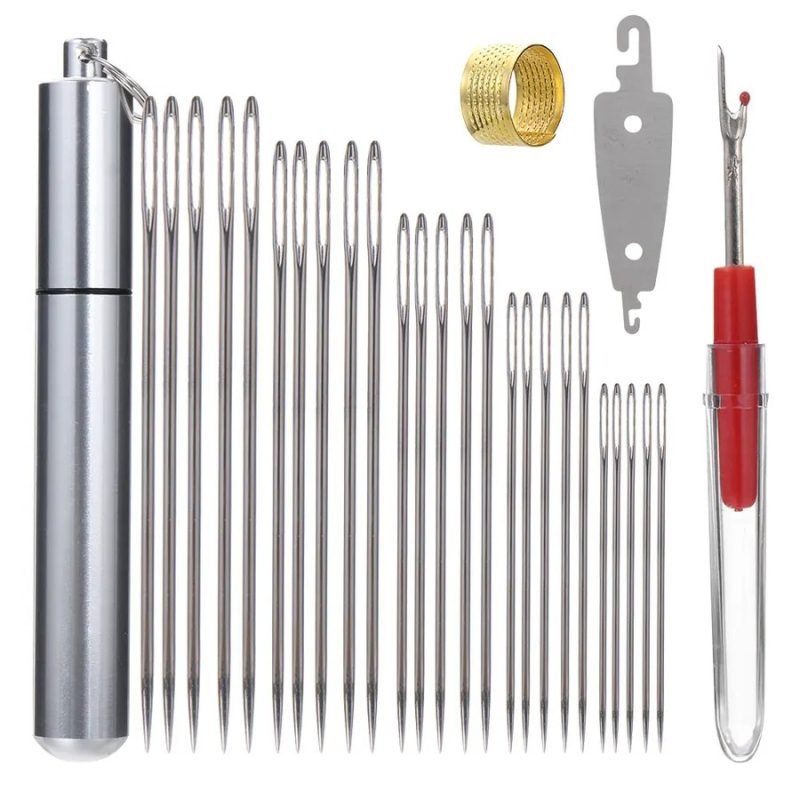
Tapestry needles have long oval eyes so two or three strands sit side by side rather than bunched.
That matters because bunched strands twist, and twisted strands produce ropey uneven stitches. It is the same problem railroading exists to solve.
If threading is the frustrating part, a threader is a few pence well spent. There is one in the hand sewing needle set, and more in accessories and tools.
Needles wear out
This surprises people. A needle is not permanent.
The plating wears through where your fingers hold it, and once the base metal is exposed it drags and can tarnish. Signs it is done: it feels rough passing through the fabric, it has developed a slight bend, or it leaves grey marks on pale thread.
Replace it. They cost very little, and there is a spread in needles, hoops and frames.
Storage, briefly
Not loose in a tin where they blunt against each other and get lost.
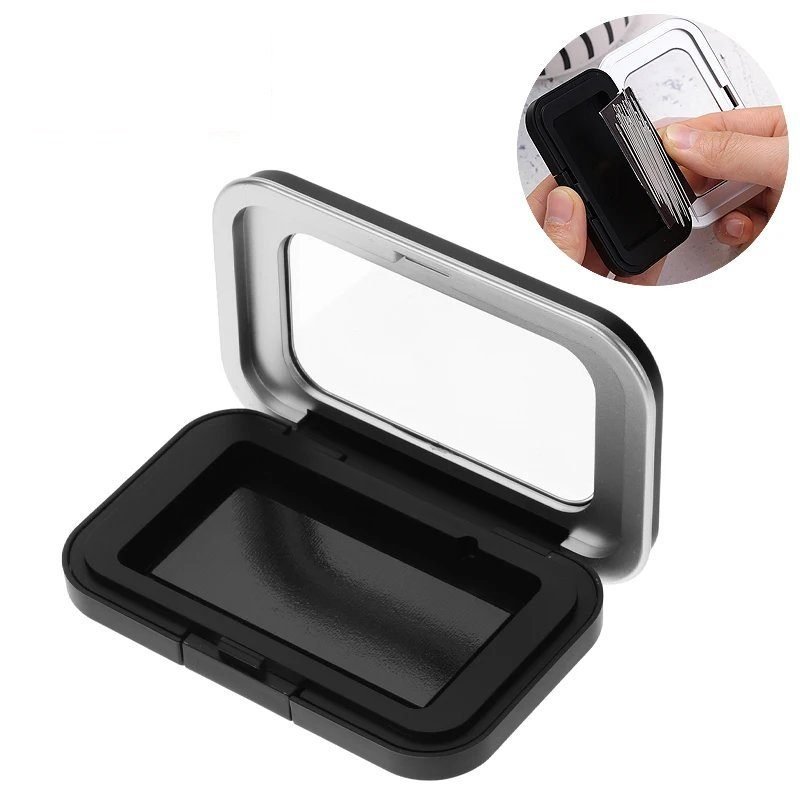
A magnetic case keeps them together and lets you park a threaded needle mid-row without losing your place — the magnetic needle organiser does exactly that, and it clips onto the chart as a place-keeper too, which is genuinely useful when keeping count.
Never leave a needle parked in the fabric of an unfinished project for weeks. Some can leave a mark on the cloth over time.
What about beading and specialist work
Beaded kits need a beading needle, which is long, very fine, and sharp — a tapestry needle will not pass through most bead holes. Kits in the beaded range normally include one.
For everything else, one size 24 and a spare will see you through years. The supplies guide covers the full kit list, and the techniques guide covers what to do once it is threaded.
The short version
- Size 24 on 14-count aida, 22 on 11-count, 26 on 18-count.
- Needle numbers run backwards: a higher number is a finer needle.
- Blunt points are deliberate - they slip between fabric threads instead of splitting them.
- The long oval eye lets strands sit side by side rather than bunching and twisting.
- Needles wear out. Replace one that feels rough, has bent, or marks pale thread.
Frequently asked questions
What size tapestry needle for 14-count aida?
A size 24. That is the standard pairing and will cover the large majority of kits, since 14-count is the most common fabric. Use a 22 on 11-count aida and a 26 on 18-count, with a 28 for very fine single-strand work.
Why are cross stitch needles blunt?
Because aida is a woven grid with clear holes at the corners of each block, and you want the needle to find those holes and pass between the fabric threads. A sharp point splits the threads instead, fuzzing the weave and pulling stitches off centre.
Do higher needle numbers mean bigger needles?
No, the opposite. The numbering runs backwards, so a size 28 is finer than a size 22. It catches almost everybody out the first time. Remember that the finest fabric counts take the highest needle numbers.
How do I know if my needle is the wrong size?
It should pass through the hole with a slight, even resistance. If you have to push, it is too large and will distort the weave. If it rattles through loosely, it is too small and will drag and wear the thread as it passes.
Do embroidery needles need replacing?
Yes. The plating wears through where your fingers grip, and the exposed base metal then drags and can tarnish. Replace a needle that feels rough through the fabric, has developed a slight bend, or leaves grey marks on pale thread.