Quick answer: Wind threads onto bobbins and store them in a compartment box, labelled with the shade number. Loose skeins tangle, lose their bands and become unidentifiable, which means you cannot match a colour when a project runs short. The labelling matters more than the container does.
I spent twenty-two years watching people buy thread and about half of it, I suspect, replaced thread they already owned and could not find.
Storage sounds like a dull subject. It is the difference between fifteen minutes of stitching and fifteen minutes of hunting.
The real problem is not tangling
It is identification.
A skein loses its paper band, and now it is a length of medium blue that you cannot match, cannot restock and cannot use with confidence on a project that needs a specific shade.
Tangling is annoying. Losing the number is expensive. Everything below follows from that.
The options
| Method | Good for | Drawback |
|---|---|---|
| Bobbins in a box | Large collections, finding a shade fast | Winding time; can crease thread |
| Thread rings | One project's palette, portability | Gets unwieldy past twenty colours |
| Original bands, in a bag | Small collections, no faff | Bands slide off constantly |
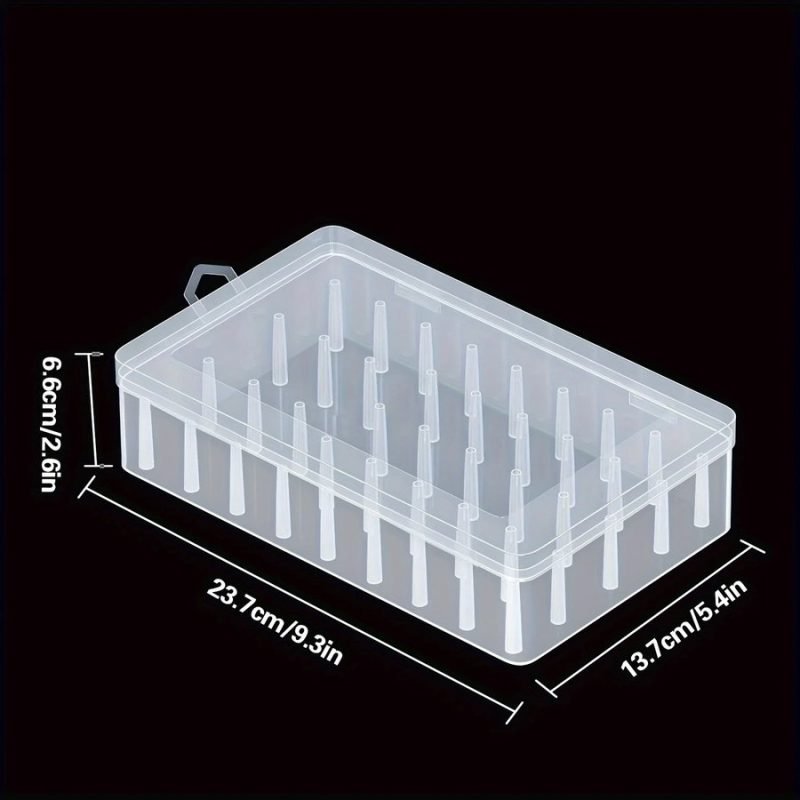
| Drop-in spool boxes | No winding, no creasing | Bulkier per colour |
The 42-spool storage box is the drop-in kind, which I have come round to. There is more in accessories and tools.
Whatever you choose, label it
Write the shade number on the bobbin or the compartment before you wind. Not after. Not later.
You will not remember. Nobody remembers.
If a thread has already lost its number, keep it separately as "unidentified" and use it for practice, testing wash-fastness, or practising fractionals on a spare piece. Do not put it in the project box where it will contaminate a palette you trust.
The per-project bag
This is the habit that actually saves time.
When you start a kit, put everything it needs in one bag: fabric, chart, that project's threads on a ring, the needle, small scissors. Then the whole project comes out and goes away in one movement.
It is also what makes it realistic to have a small piece on the go alongside a big one, which is how people get through long projects without stalling.
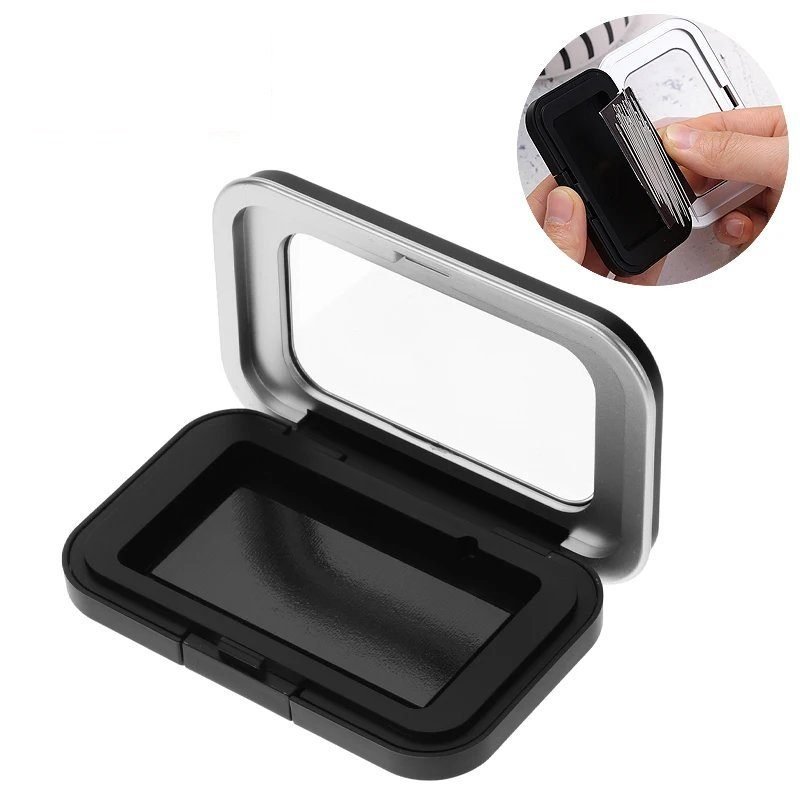
A magnetic needle case lives in that bag and stops the needle migrating into the carpet.
Winding without creasing
If you use bobbins, wind loosely and evenly. Thread wound tight and left for a year comes off with kinks that show in the stitching.
Cardboard bobbins are fine and cheap; plastic ones are kinder to the thread over long periods. Neither matters as much as the label.
What to do about leftovers
Everybody accumulates part-used skeins. Two honest options.
Keep them properly labelled and they become a genuinely useful bank for the day a kit runs short.
Or accept that you will never use forty centimetres of a specific mauve and stop storing it. Both are reasonable. What is not reasonable is a drawer of unlabelled fragments you will never touch.
Buying with storage in mind
A set bought as a set is easier to keep in order than the same colours bought piecemeal. The 50-skein floss set and the 50-colour pack arrive organised and stay that way if you keep the tray.
Browse the full range in threads and floss, and the supplies guide covers what else is worth owning.
The short version
- The real problem with loose thread is losing the shade number, not tangling.
- Label the bobbin or compartment before you wind, never afterwards.
- Keep unidentified threads separate and use them for practice and wash tests.
- A per-project bag with fabric, chart, threads, needle and scissors is the habit that saves most time.
- Wind bobbins loosely - tightly wound thread left for a year comes off kinked.
Frequently asked questions
What is the best way to store embroidery thread?
On bobbins or spools in a compartment box, with the shade number written on each one. The container type matters far less than the labelling. Loose skeins lose their paper bands, and an unidentifiable thread cannot be matched or restocked.
Should I wind thread onto bobbins?
It works well for large collections and makes finding a shade fast. Wind loosely and evenly, because thread wound tight and left for a year develops kinks that show in the stitching. Drop-in spool boxes avoid the winding and the creasing entirely.
What should I do with thread that has lost its number?
Keep it separately as unidentified and use it for practice, testing whether a colour runs in water, or working fractional stitches on a spare piece. Do not return it to the main store, where it will contaminate a palette you otherwise trust.
How should I organise threads for a single project?
Put that project's threads on a ring and keep them in a bag with the fabric, chart, needle and scissors. The whole project then comes out and goes away in one movement, which is what makes it realistic to keep two pieces going at once.
Is it worth keeping leftover thread?
Only if it is properly labelled, in which case it becomes a useful bank for when a kit runs short of a shade. A drawer of unlabelled fragments is not storage, it is postponed binning, and it takes up space you could use better.