Quick answer: Thread numbers are identifiers, not a scale. Codes were assigned as shades were added to a range over decades, so two numbers one apart can be completely different colours and a shade family is not a run of consecutive numbers. To substitute a missing shade, match lightness first and hue second, and compare the actual threads rather than the numbers.
Every chart key is a list of numbers, and nobody explains what the numbers are. They look like they should mean something - as if higher means darker, or neighbouring numbers are neighbouring shades. They do not.
The numbers are names, not a scale
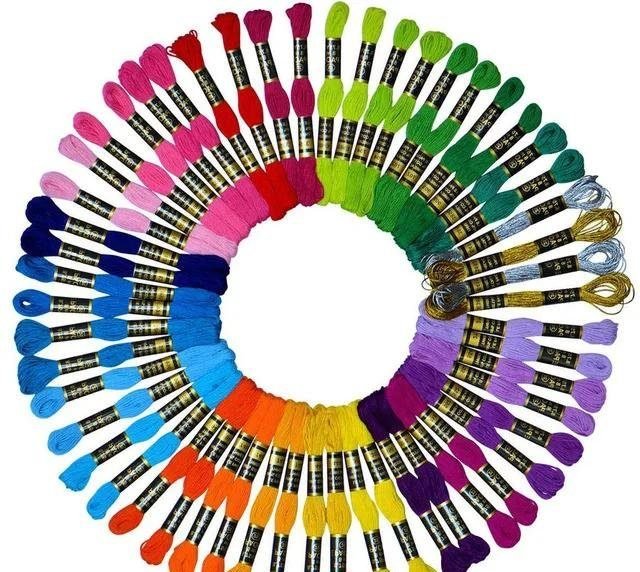
A floss code is an identifier, assigned as shades were added to the range over many decades. Two numbers one apart can be completely different colours, and a shade family is not a tidy run of consecutive numbers.
The practical consequence: you cannot guess a substitute by moving up or down a number. If a chart calls for a shade you do not have, you have to compare the actual threads.
A few shades are named rather than numbered - white and ecru being the obvious ones - which catches people out when they search a chart key for a number that was never there.
Reading a chart key
A key pairs each symbol on the chart with a thread code, and sometimes a colour name. Work from the symbol, not the printed colour: chart colours are approximations chosen so symbols stay legible, and a printer will shift them further.
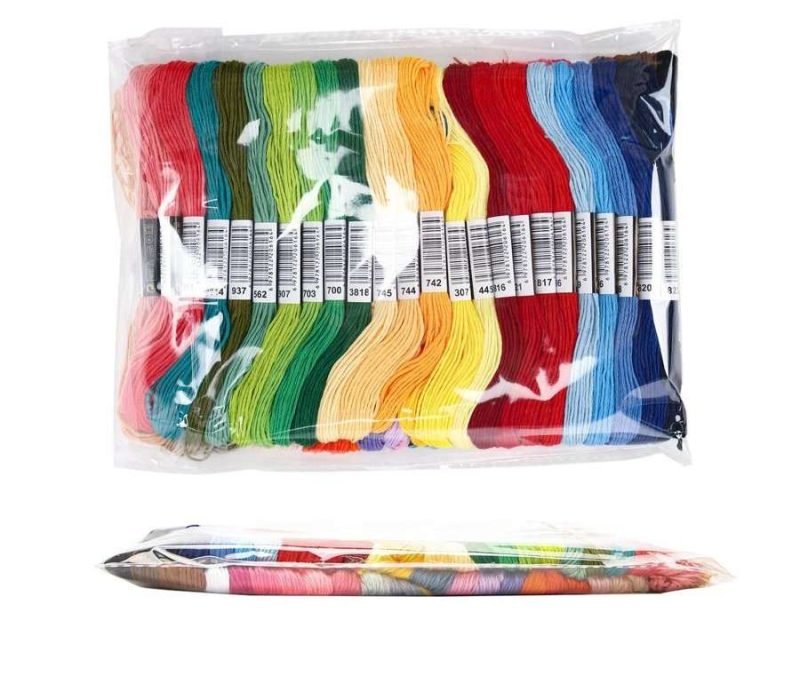
- Keep the band on the skein. Once the paper band is off, the code is gone and matching it again by eye is genuinely hard.
- Label as you wind. Write the code on the bobbin or peg before you wind, not after.
- Check for a backstitch line in the key. It is often a different code from the block colour next to it.
Every kit we sell has the threads already sorted to the chart, so this matters most when you start stitching your own designs from a pattern and buying threads separately.
Substituting a shade you do not have
Match lightness before you match colour. A substitute that is the right hue but too dark will punch a hole in the shading, where one that is slightly off in hue but correct in lightness usually disappears into the finished piece.
The reliable test is to look at the two threads together in daylight with your eyes half closed. Squinting removes hue and leaves you comparing light and dark, which is the thing that actually shows in a finished design.
If a design uses three shades of the same colour for shading, substitute all three or none. Replacing the middle one alone is what makes shading look stepped.
Different brands, different numbers
Thread brands each run their own numbering, so a code from one is meaningless on another. Conversion charts exist and are useful, but treat them as a starting point rather than an exact match - a converted shade is usually close, not identical.
For a single project the simplest answer is to stay with one brand throughout. Mixing brands in one piece can show as a subtle difference in sheen as much as in colour, especially across a large area of one shade.
Keeping track between projects
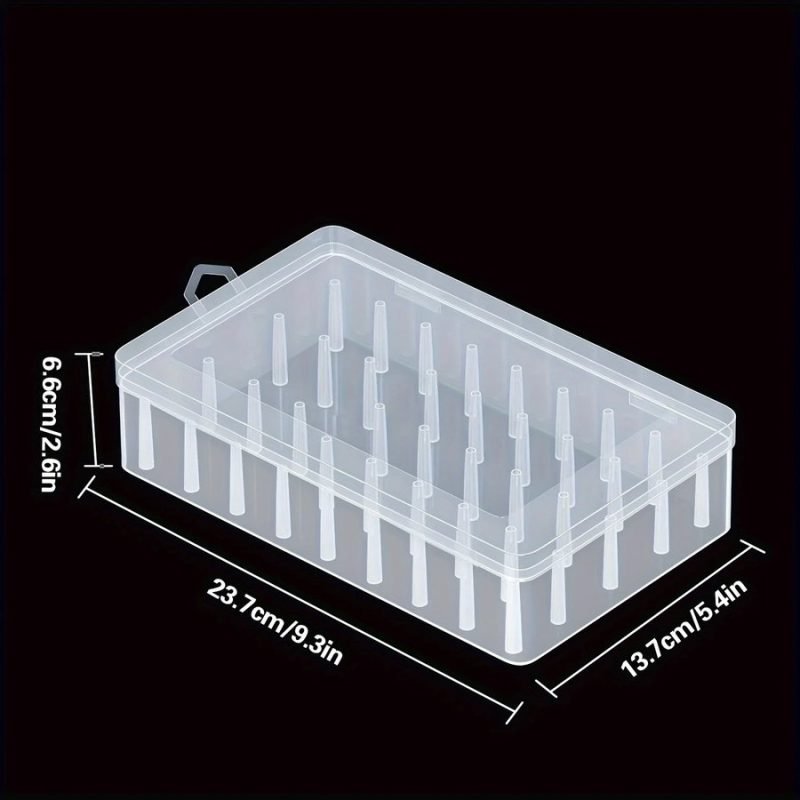
Most people lose more thread to disorganisation than to use. A storage box or bobbin system keeps codes attached to threads, which is the whole battle - our notes on thread storage and what to do when you run out mid-project go further.
If you are still working out how many strands to use with each code, how many strands of floss covers that, and the complete supplies guide covers the rest of the kit bag.
The short version
- A thread code is a name, not a position on a scale – you cannot guess a substitute by going up or down a number.
- A few shades are named rather than numbered, white and ecru being the usual ones.
- Work from the symbol in the chart key, not the printed colour: chart colours are approximations.
- Keep the paper band on the skein, and label the bobbin before you wind, not after.
- Substituting? Match lightness first. Squint at the two threads in daylight – that removes hue and shows what will actually read.
Frequently asked questions
Do higher cross stitch thread numbers mean darker colours?
No. The numbers are identifiers assigned as shades were added to a range over many decades, not a scale. Two codes one apart can be entirely different colours, and the shades within one colour family are not consecutive numbers.
How do I substitute a thread colour I do not have?
Match lightness before hue. Lay the two threads side by side in daylight and half close your eyes - that strips out the colour and leaves you comparing light and dark, which is what actually shows in the finished piece. A shade that is slightly off in hue but right in lightness usually disappears; one that is too dark will not.
Can I mix thread brands in one project?
You can, but it is worth avoiding across a large area of a single shade. Brands differ in sheen as well as colour, and that difference can show more than a small mismatch in hue. Conversion charts between brands are a good starting point rather than an exact match.
What do I do if I lose the paper band off a skein?
Matching a loose thread back to a code by eye is genuinely difficult, so the practical answer is prevention: write the code onto the bobbin or storage peg before you wind the thread, not afterwards. If it is already lost, compare against a shade card in daylight rather than under a lamp.
Do your kits need me to know any of this?
No. Every kit comes with the threads already sorted to the chart, so the codes are matched for you. This matters when you move on to stitching your own designs and buying threads separately.