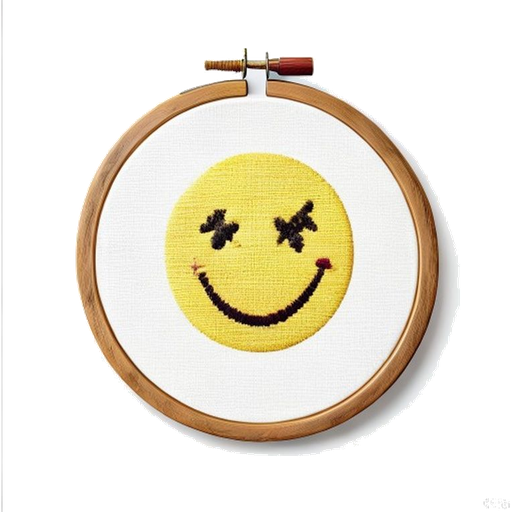
Quick answer: Learning how to cross stitch means working rows of small X shapes across the little squares of aida fabric, following a printed chart square by square. Start with a beginner kit that has the fabric, threads, needle and pattern together, learn the full cross and the backstitch outline, and you will finish a small piece in an afternoon.
There is a particular quiet that settles over a room when the telly is off and the needle is going. I have felt it for fifty years, first beside my grandmother in a cold Yorkshire front room, later with thirty fidgeting teenagers who went silent the moment the thread came out. That is the thing nobody tells you about learning how to cross stitch: the calm arrives before you are any good at it. So let me walk you through the whole business, the way I would if you had pulled up a chair at my Thursday circle.
What cross stitch actually is
Cross stitch is counted embroidery. You make tiny X shapes on a woven fabric called aida, which is gridded with neat little holes so every stitch lands in the right place. Follow the chart, one coloured square at a time, and a picture builds up under your hands like a slow photograph developing.
That is the whole craft in a sentence. Everything else is detail, and the detail is where the pleasure lives.
The Royal School of Needlework, which has taught hand embroidery since 1872, treats cross stitch as one of the foundation stitches for a reason: it is forgiving, rhythmic, and it rewards patience over talent Royal School of Needlework. You do not need a good eye. You need to be able to count to ten and enjoy a cup of tea going cold beside you.
Start with a kit, not a shopping list
New stitchers often try to buy everything separately and tie themselves in knots. Do not. A proper beginner kit puts the fabric, the threads wound and labelled, the needle and the chart in one box, so you can start the same evening it arrives. Our beginner and starter kits are chosen for exactly this: nothing missing, nothing baffling. Something like the beginner embroidery starter kit with three hoops gives you the lot and a first project to boot.
Once you are hooked, and you will be, the wider easy kits range keeps the difficulty gentle while the designs get prettier.
The tools, kept simple
Here is all you truly need to begin.
- Aida fabric, usually 14-count, meaning fourteen stitches to the inch. A comfortable place to start.
- A blunt tapestry needle, size 24. Blunt on purpose, so it slides between threads rather than splitting them.
- Stranded cotton floss, separated into the number of strands your chart asks for, normally two.
- A hoop, to hold the fabric taut. Not essential, but your stitches will sit far neater.
- Small sharp scissors, and good light.
That is it. Resist the gadget rabbit hole for now.
How to cross stitch: the full stitch, step by step
Every design is built from one move, repeated. Learn it once and you can stitch anything.
- Bring the needle up through a bottom-left hole, leaving a short tail behind to catch under your first stitches.
- Take it down through the top-right hole. That is a half stitch, a single diagonal.
- Come up through the bottom-right, down through the top-left. Now you have a complete X.
- Repeat along the row. For neat work, keep the top diagonal facing the same way on every single stitch. Consistency is what separates tidy work from a muddle.
When a row of the same colour runs on, stitch all the bottom diagonals first, then come back the other way completing the tops. Faster, and it keeps the tension even.
Reading the chart without panic
A chart is a grid of coloured squares and symbols, each symbol standing for one thread colour. The centre is usually marked with arrows, and I always start there so my design sits square on the fabric rather than sliding off one edge. Count carefully, and count twice before you commit a block of colour, because unpicking is the only truly dull part of this hobby.
The Embroiderers' Guild, the UK's charity for the craft, has a long history of teaching chart-reading in exactly this centre-out way, and their local branches are a lovely place to learn in person Embroiderers' Guild.
Which fabric and thread count suits which stitcher
The count of your aida changes everything about how a project feels. Here is the honest lay of the land.
| Aida count | Stitch size | Best for | Trade-off |
|---|---|---|---|
| 11-count | Large, easy holes | Children, older eyes, quick wins | Finished piece is bigger and less fine |
| 14-count | Medium, the classic | Most beginners and everyday projects | The sensible all-rounder, hard to fault |
| 16-count | Smaller, finer | Confident stitchers wanting detail | Needs decent light and steady counting |
| 18-count | Fine and delicate | Detailed portraits and samplers | Slow going, best left until you are keen |
Start at 14 unless your eyes tell you otherwise. You can always drop to 11 for comfort or climb higher when the bug bites.
Finishing your first piece
When the last X is done, resist framing it grubby. Give it a gentle hand-wash in cool water, roll it in a towel, and press it face-down on a soft cloth so you do not flatten the stitches. Then a simple hoop frame or a card mount, and it is ready for the wall. There is no feeling quite like hanging your first finished thing and thinking, quietly, I made that.
Where to go next
You have the whole of it now: fabric, needle, the cross, the chart, the finish. The rest is repetition and a growing pile of projects you cannot resist.
When you are ready to sharpen your stitches, my colleague Derek's cross stitch techniques guide covers the neat tricks, and when you fancy choosing by mood rather than skill, the kits by theme guide will point you at florals, animals or something modern. Everything you need to start, meanwhile, is waiting in the beginner kits range.
Frequently asked questions
Is cross stitch hard to learn? No. Cross stitch is one of the easiest needlecrafts to pick up because it uses a single repeated stitch, the X, worked on gridded fabric that shows you exactly where to go. Most people finish a small beginner piece in an afternoon or two.
What do I need to start cross stitch as a beginner? A beginner kit with aida fabric, a blunt size-24 tapestry needle, stranded cotton, a hoop and a printed chart is all you need. Buying a complete kit is easier and cheaper than sourcing each item separately.
What size aida should a beginner use? Start with 14-count aida. It has clear holes, medium-sized stitches and suits most beginner charts. Choose 11-count for larger, easier stitches if your eyes or hands prefer it, and move to 16 or 18-count only once you are confident.
About the author Peggy Whitlock - Fifty years of thread and patience Peggy taught needlework and textiles at a Yorkshire secondary school for over thirty years before retiring to Whitby. She has stitched since she was seven, sitting beside her grandmother, and has demonstrated at village shows and the Great Yorkshire Show. These days she runs a small Thursday stitching circle at her local church hall. Writing for Cross Stitch Kits UK.