Quick answer: Fractional stitches let a grid of squares produce a curve. A half stitch is one diagonal leg, a quarter runs from a corner to the centre of the square, and a three-quarter combines the two. Charts mark them with part-filled symbols, and they always need piercing the fabric block.
You reach a curve and the chart shows a symbol filling only part of a square. That is a fractional, and it is the point at which cross stitch stops being purely mechanical.
The three of them
Half stitch. One diagonal leg on its own. Used for soft backgrounds and distant detail, because it sits lighter than a full cross.
Quarter stitch. A leg that runs from one corner of the square to its centre, so it fills a quarter. This is the one that needs a hole where there is not one.
Three-quarter stitch. A full diagonal leg plus a quarter coming in from the opposite corner. The workhorse — this is what actually makes curves.
Charts show these as part-filled squares, often with two symbols sharing one square. Two three-quarters back to back is very common on a diagonal edge.
The bit nobody warns you about
To bring a quarter stitch to the centre of a block, you have to put the needle through the aida, not through a hole.
That feels wrong the first time. It is correct.
Push gently and let the needle find its way between fibres rather than forcing it. And here is where a blunt tapestry needle actually fights you slightly — some people keep a single sharp needle to hand purely for fractionals. The needle guide covers sizes; there are sets in the needle set and needles, hoops and frames.
Which way round
Where two three-quarters share a square, the rule is: the colour that dominates the shape gets the full diagonal, and the other gets the quarter.
If the chart does not make it obvious, look at what the shape is doing. The edge that should read as a clean curve takes the long leg.
Be consistent across a piece. Alternating your reasoning is what makes a curve look ragged.
When to skip them
Honestly? Sometimes.
On 18-count, a fractional is very small and the difference between doing it properly and rounding it to a full stitch is close to invisible at normal viewing distance.
On 11-count it is glaringly obvious and you must do it. The lower the count, the more each fraction matters — the count guide explains the scale.
I would not skip them on faces, lettering or anything with a clean curved edge. Foliage and texture, you can get away with it.
Fabric matters here
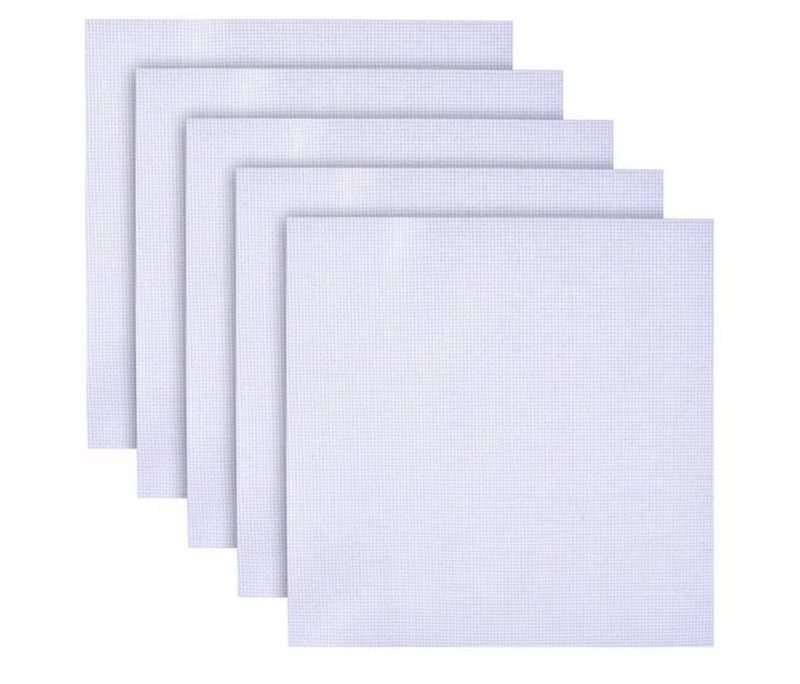
Piercing works on aida because the blocks are woven from bundles of threads with space between the fibres.
On evenweave or linen you do not pierce at all — you are working over two fabric threads anyway, so the halfway point is a real hole. That is one genuine advantage those fabrics have. There is more on the trade-off in the fabric range.
Practising
Do not learn fractionals on the project you care about. Work a few on the spare margin first.
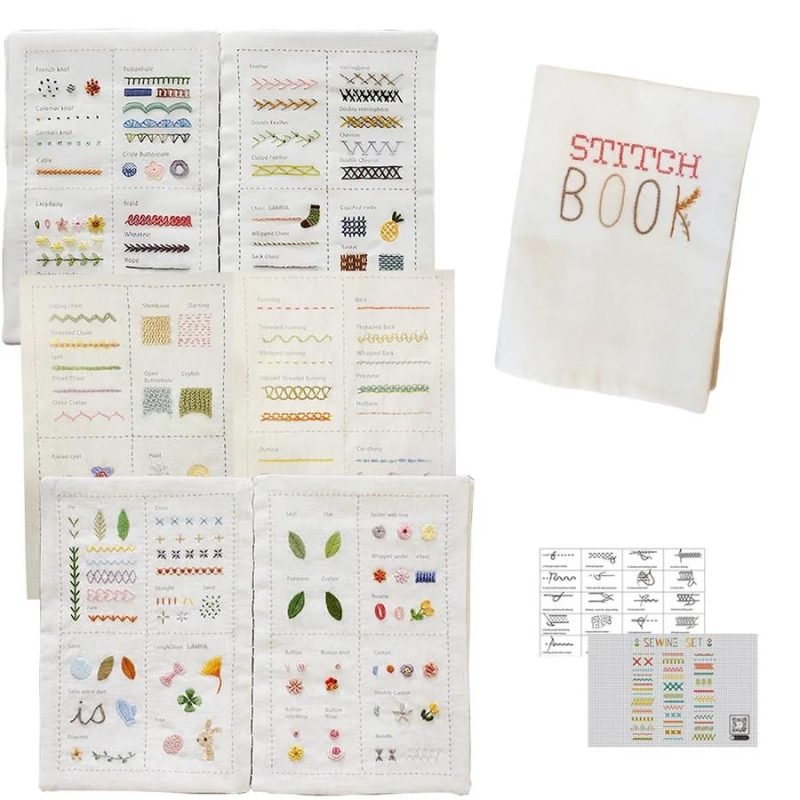
A sampler is a good place to meet them properly — the sampler kit with three designs or the stitch book kit both teach a spread of stitches, and there is more in the sampler range.
Then it is backstitch that finishes the job — the backstitch guide covers that, and the techniques pillar guide covers the rest.
The short version
- A half stitch is one diagonal leg; a quarter runs corner to centre; a three-quarter is both.
- Three-quarter stitches are what actually produce curves on a square grid.
- Quarter stitches need piercing through the aida block, not finding an existing hole.
- Where two three-quarters share a square, the dominant shape takes the full diagonal.
- Fractionals matter enormously on 11-count and barely at all on 18-count.
Frequently asked questions
What is a three-quarter cross stitch?
A full diagonal leg plus a quarter stitch coming in from the opposite corner, filling three quarters of the square. It is the stitch that lets a grid of squares describe a curve, and it is by far the most common fractional on a chart.
How do I make a quarter stitch on aida?
Bring the needle up at a corner of the block and take it down through the centre of the block itself, piercing the fabric rather than finding a hole. Push gently and let the needle work between the fibres instead of forcing it.
Which colour gets the full leg when two share a square?
The colour that dominates the shape at that point, so the edge meant to read as a clean curve takes the long diagonal. If the chart is not explicit, look at what the shape is doing and stay consistent across the whole piece.
Can I skip fractional stitches?
Sometimes. On 18-count the difference is close to invisible at normal viewing distance, so rounding to a full stitch in foliage or texture is defensible. On 11-count it is glaringly obvious, and you should never skip them on faces or lettering.
Are fractional stitches easier on evenweave than aida?
Yes. On evenweave or linen you are already stitching over two fabric threads, so the halfway point is a genuine hole rather than a spot you must pierce. That is one of the real practical advantages those fabrics hold over aida.