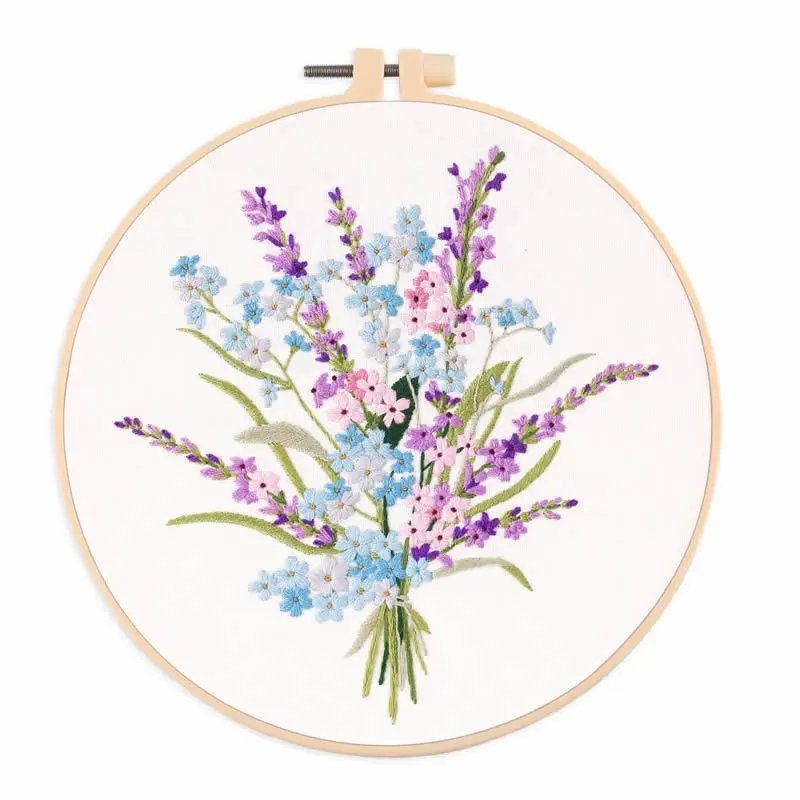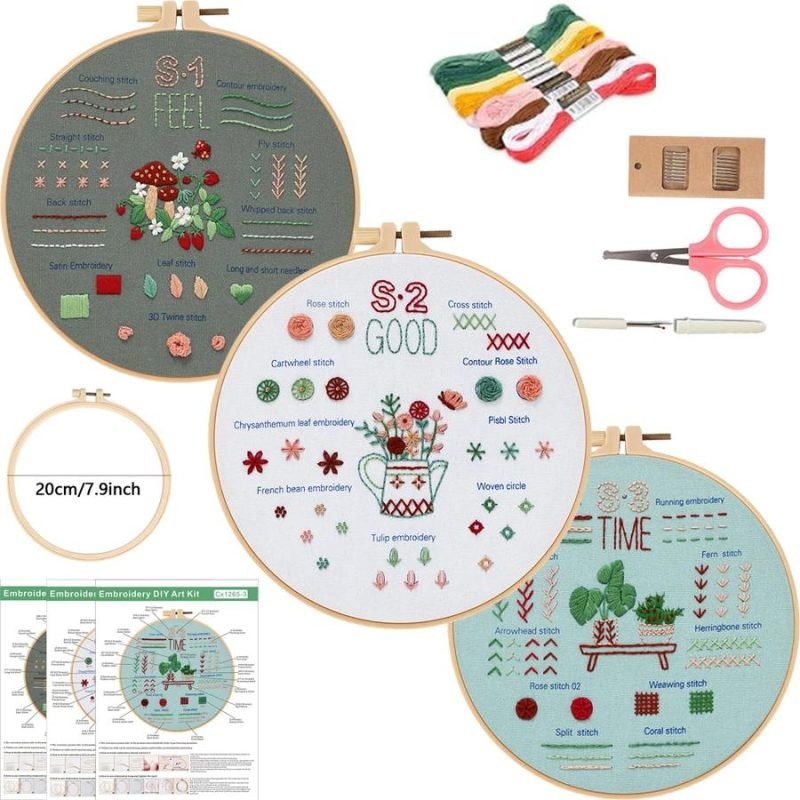
Quick answer: A small kit of about ten centimetres takes most people three or four evenings. A medium piece runs to a few weeks, and a large detailed design takes months. The honest way to estimate is stitches divided by your own hourly rate, which you will only know after one project.
Nobody asks this until they are already halfway into something. Then it arrives, usually with a note of panic: how much longer?
Let me give you a proper answer rather than a comforting one.
The only sum that works
Count the stitches, divide by how many you do in an hour. That is it.
Your hourly rate is personal and there is no standard figure I would put in front of you as fact. What I can tell you is that everybody is slow at first and everybody speeds up, usually within the first few sessions.
So stitch for one measured hour on your current project, count what you got through, and use that number. It will be more accurate than any chart on the internet.
Rough shapes, honestly labelled
| Kit size | Feels like | Typical run |
|---|---|---|
| Card or bookmark | A single sitting | An evening or two |
| Small hoop piece | A short project | Three or four evenings |
| Medium framed piece | A proper commitment | A few weeks |
| Large detailed design | A long haul | Months |
Those are ranges from what I have watched happen, not promises. Someone who stitches every evening will beat them and someone who manages Sunday afternoons will not.
What actually makes a kit slow
Not size. Colour changes.
A design with eight colours in solid blocks flies. The same size design with sixty colours scattered singly — confetti, as stitchers call it — can take three times as long, because rethreading eats the clock.
Fabric count matters too. An 18-count piece packs more stitches into the same area than the identical chart on 11-count, so it takes longer even though it looks smaller. That is worth understanding before you buy, and the aida count guide covers the maths.
Speeding up honestly
There are a few real gains and a lot of nonsense. The real ones:
- Work one colour across a whole area rather than jumping about.
- Use a hoop. Taut fabric is faster as well as neater, and it stops puckering.
- Sort your threads before you start. A thread storage box pays for itself in found minutes.
- Good light. You go slower when you squint, every time.
What does not help is rushing. Rushed stitches are uneven stitches, and unpicking costs far more time than it saves.
Choose a length, not just a picture
This is the part I would actually change about how people shop.
Decide how long you want to be busy, then find something you like in that bracket. Our small kits and mini kits are the short brackets, large kits the long one.
The guide to choosing a first size goes into why this matters so much more than people expect.
A concession about long projects
I am not against them. Some of the best pieces I have seen took a year, and the person who made them would not swap that year.
But go in knowing. A large kit is a relationship, not a purchase, and there will be a fortnight in the middle where you resent it.
Two things get you through: the parking method, and something small on the go alongside. Have a look at the easy kits for that.
Before you commit
Check the stitch count and the colour count on the box, not just the picture. Then be honest about your evenings.
If you want the full picture on materials, the supplies guide covers it, and the beginner's guide gets you started. Everything we stock is in the main kit range.
The short version
- Estimate from stitches divided by your own hourly rate - measure one hour on your current project.
- Colour changes slow a project far more than physical size does.
- The same chart on 18-count takes longer than on 11-count, despite finishing smaller.
- Real time savers: one colour at a time, a taut hoop, sorted threads and good light.
- Choose a project length first, then pick a design you like within that bracket.
Frequently asked questions
How long does a small cross stitch kit take?
Most people finish a small hooped piece of around ten centimetres in three or four evenings. A card or bookmark design is shorter still, often a single sitting. Your first project will be slower than that, and your second noticeably faster.
How do I estimate how long my kit will take?
Stitch for one measured hour, count what you completed, then divide the chart's total stitch count by that number. It is far more accurate than any general figure, because stitching speed varies enormously between people and improves quickly.
Why is my kit taking longer than the box suggests?
Usually thread changes. A design with many colours scattered a stitch at a time takes far longer than a same-sized design with solid blocks, because rethreading eats the time. Higher fabric counts also pack more stitches into the same area.
Does using a hoop make stitching faster?
Yes, noticeably. Taut fabric means you can push the needle through and find the next hole without pinching the cloth into position each time. It also keeps your tension even, which saves the far bigger cost of unpicking uneven work later.
Should I start a large project as a beginner?
You can, but go in knowing it is a commitment of months rather than evenings, and expect a stretch in the middle where you resent it. Learn the parking method first, and keep a small kit running alongside for evenings when patience is short.