Quick answer: Drop to a lower fabric count so each stitch is larger, use a stand or frame so your hands are not holding the weight, and work in short sessions with breaks. Larger holes, better light and a magnifier solve most of it. The craft adapts further than people assume.
I have had messages from people who assumed cross stitch was closed to them now. Often they had tried once, found it painful or impossible, and put it away.
Almost always there was an adaptation nobody had mentioned.
Start with the fabric count
This is the biggest single lever and the one people never think of.
Dropping from 14-count to 11-count makes every hole noticeably larger and every stitch bigger. Less precision required, less squinting, fewer stitches for the same finished size.
Plastic canvas goes further still — the holes are enormous and it holds its own shape without a hoop. The plastic canvas sheets are worth trying, and there is more in the fabric range. The count guide explains the trade-off in finished size.
Take the weight off your hands
Holding a hoop is a sustained grip, and a sustained grip is what hurts.
A stand or a clamp frame holds the work for you, leaving both hands free to move rather than hold. That single change is what most people report as the difference between an hour and ten minutes.
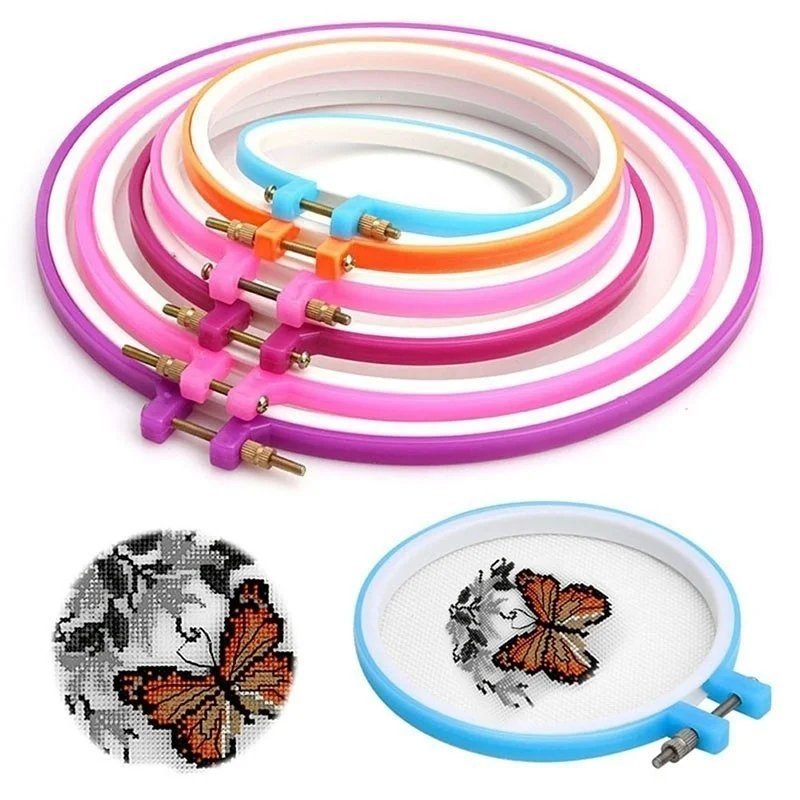
If a stand is not practical, rest the hoop against a table edge or a cushion on your lap. Lighter hoops help too — plastic hoops weigh considerably less than wooden ones, and there is a spread in needles, hoops and frames. The hoop guide covers sizing.
Light, and then magnification
Light first. A directed lamp on the work, positioned to the side so the weave casts small shadows, does more than magnification does.
Then a magnifier if you still need it. A neck-worn or stand-mounted magnifier keeps your hands free; a handheld one defeats the object.
Short sessions beat long ones
Twenty minutes and a break. Then another twenty if you want it.
Stiffness builds up in a way that a break resets and a long session does not. Set the work down before it starts to ache rather than after — the pain arrives later than the strain does.
Stretch your hands between sessions. Versus Arthritis publishes hand and wrist exercises that are worth looking at Versus Arthritis.
Tremor specifically
Larger holes help enormously, because you need less accuracy to find them.
So does bracing. Rest your forearms on a table or the arms of a chair rather than working with your hands in mid-air.
And choose forgiving subjects. Texture hides variation — furred animals, florals, foliage. Avoid straight lines and lettering, which show every wobble.
Threading, which is the other pain point
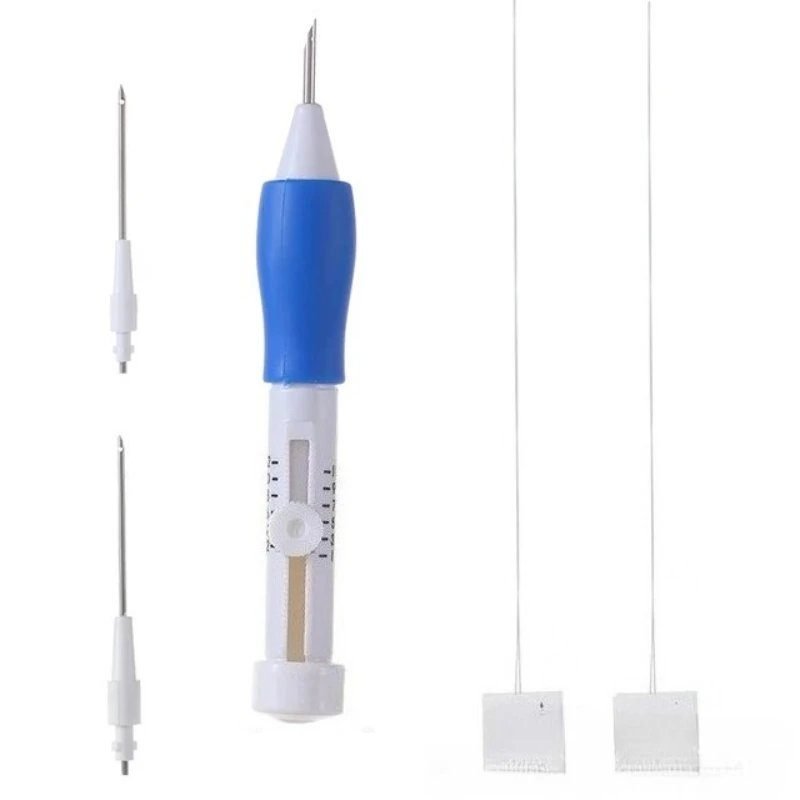
A needle threader costs pence and removes the most fiddly moment of the whole craft. There is one in the needle set.
Thread several needles at the start of a session while your hands are fresh, and park them in a magnetic case. Then you are not doing the hardest thing when you are most tired.
Needles with larger eyes exist too — the needle guide covers sizing, and a size 22 has a noticeably bigger eye than a 24.
Choosing a project
Bigger designs on lower counts, not small designs on fine fabric. A large simple piece from large kits on 11-count is far kinder than a tiny detailed one.
Few colours, so fewer rethreads. Blocks rather than confetti. Easy kits and simple starters are picked with that in mind.
The honest bit
Some days it will not be possible, and that is not a failure of technique. Put it down.
The craft is meant to be a pleasure, not a test of endurance — the same point applies to stitching for calm. If pain is significant or new, that is worth raising with a GP rather than working around.
The supplies guide covers the equipment side properly.
The short version
- Dropping to 11-count aida or plastic canvas makes every hole larger and every stitch bigger.
- A stand or clamp frame removes the sustained grip that causes most of the pain.
- Light the work from the side first; add magnification only if you still need it.
- Work twenty minutes at a time and set it down before it aches, not after.
- Thread several needles while your hands are fresh and park them in a magnetic case.
Frequently asked questions
Can I still cross stitch with arthritis?
Usually yes, with adaptations. Dropping to a lower fabric count makes each stitch larger and less precise to place, and a stand or clamp frame removes the sustained grip that causes most of the discomfort. Short sessions with breaks matter more than technique.
What fabric count is easiest on the hands and eyes?
Eleven-count aida, or plastic canvas if you want to go further. Both have noticeably larger holes than the standard 14-count, so you need less accuracy to find them and fewer stitches to cover the same finished area.
How do I stitch with a hand tremor?
Use larger holes so less accuracy is needed, and brace your forearms on a table or the arms of a chair rather than working in mid-air. Choose textured subjects such as fur or foliage, which hide variation, and avoid lettering and straight lines.
What helps with threading the needle?
A needle threader, which costs very little and removes the fiddliest moment in the craft. Thread several needles at the start of a session while your hands are fresh and park them in a magnetic case, so you are not doing it when tired.
Should I use a magnifier?
Improve the lighting first, with a directed lamp positioned to the side so the weave casts small readable shadows. If you still need magnification, choose a neck-worn or stand-mounted magnifier, because a handheld one occupies a hand you need.