Quick answer: Scrolling gives you constant small rewards and nothing to show at the end. Stitching gives slower rewards and a physical result you can point at. The difference is not moral, it is structural, and the practical trick is making the kit easier to reach than the phone.
I do not want to lecture anybody about screens. I spent eight years in marketing making things people scrolled at, so I am hardly in a position to.
But I did swap one hour, most evenings, and it changed more than I expected. Here is what I think is actually going on.
The structural difference
Scrolling is designed to deliver a small reward every few seconds, unpredictably. That is a very effective way to hold attention and a very poor way to leave someone feeling rested.
Stitching delivers a reward roughly every thirty minutes, when you look down and see a shape emerging. Slower, and duller in the moment.
What it also does is leave something behind. At the end of the hour there is a thing that did not exist before. That is not a small difference — it is most of the difference.
Hands matter
The phone leaves your hands almost still. Stitching occupies them completely.
Something about that seems to settle the rest of the system, and it is the same reason people knit in meetings or fiddle with a pen. Your hands being busy makes it much harder for your head to spiral, which is why the craft works so well for anxious evenings.
Making the swap actually stick
This is the part nobody tells you, and it is not about willpower.
Put the kit somewhere easier to reach than the phone. Beside the chair you sit in, out of its bag, needle already threaded.
Whichever is closer wins. That is the entire mechanism.
- Pick something small enough that you are never facing a mountain. The mini kits and small kits ranges are for this.
- Pick a design with few colour changes, so you can stitch without concentrating hard.
- Do not set a target. A target turns rest into a chore.
Which kit suits an evening
Not the ambitious one. That is a different activity, and a good one, but it is not this.
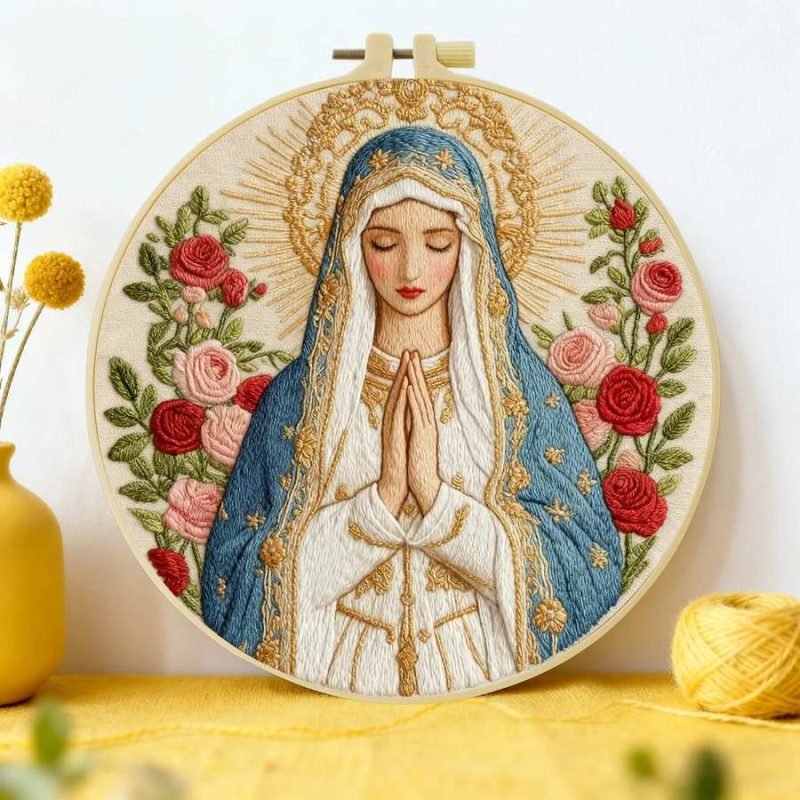
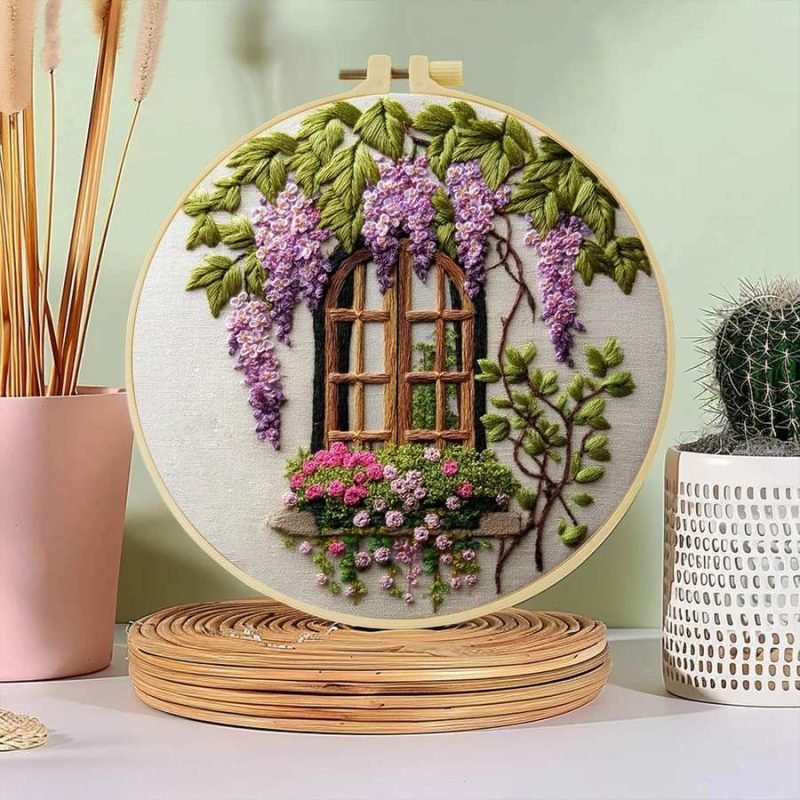
For evenings you want blocks of colour and a chart you barely need to look at. Florals do this best — the floral range, or something like the wisteria window kit. For a grown-up subject with real presence, the adult kits range and the Madonna and roses kit are both absorbing without being fiddly.
What I will not claim
That stitching will fix your sleep, your focus or your relationship with your phone. It did not do any of those things on its own for me.
The NHS publishes practical guidance on screen habits and winding down, and it is worth reading if evenings are genuinely difficult NHS Every Mind Matters.
What I will claim is narrower and I think true: an hour spent stitching leaves you feeling differently at the end of it than an hour spent scrolling. Try one week and judge for yourself.
Starting from nothing
If you have never stitched, start with a complete kit rather than assembling materials. Beginner kits have everything in the box.
The beginner's guide covers the first stitch, and the wellbeing guide goes further into why the craft does what it does. If you want to know what you are committing to, the timings guide is honest about it.
The short version
- Scrolling rewards you every few seconds and leaves nothing; stitching rewards slowly and leaves an object.
- Occupied hands are much of the effect - it is the same reason people fiddle with a pen.
- Keep the kit closer to your chair than your phone. Proximity beats willpower.
- Choose blocks of colour and few thread changes for evenings; save complex pieces for other times.
- Do not set a target. A target turns rest into another thing you are behind on.
Frequently asked questions
Why does stitching feel more restful than scrolling?
Scrolling is built to deliver small unpredictable rewards every few seconds, which holds attention without producing rest. Stitching rewards you slowly and leaves a physical object behind at the end of the hour, which changes how the time feels afterwards.
How do I actually swap an hour of phone time for stitching?
Make the kit easier to reach than the phone. Leave it beside your chair, out of its bag, with the needle already threaded. Whichever is physically closer tends to win, and that is far more reliable than relying on willpower.
What kind of kit works best for evenings?
Something small, with blocks of colour and few thread changes, so you can stitch without concentrating hard. Florals suit this particularly well. An ambitious multi-colour design is absorbing but demanding, which is a different activity from winding down.
Will cross stitch improve my sleep?
It may help, but do not expect it to fix things on its own. A craft is one habit among many that affect how an evening goes. If winding down is genuinely difficult, the NHS publishes practical guidance that is worth reading alongside.
Do I need to buy a lot to start?
No. A complete beginner kit includes the fabric, threads sorted to the chart, a blunt needle and instructions, so there is nothing else to buy. Assembling materials separately is worth doing later, once you know you enjoy it.