Quick answer: Cross stitch helps anxiety because it occupies your hands and enough of your attention that rumination has nowhere to go. The repetition is predictable, progress is visible, and there is no timer. Twenty minutes is enough to feel it. It is not treatment, but it is a genuinely useful thing to have.
I want to be careful here, because this subject attracts a lot of overclaiming.
Cross stitch did not cure my anxiety. Eight years in a marketing job I could not switch off from, then burnout, then a long climb back — a hobby was not what fixed that.
But it helped. Genuinely, measurably in my own life, it helped. So let me be honest about how, and about what it isn't.
What is actually happening
Anxious thinking needs space to run. Lying awake, sitting still, staring at a screen while your mind does laps.
Stitching takes up just enough. Your hands are busy. A small part of your attention is counting. There is not enough room left over for the loop to get going.
That is different from distraction. Television leaves the loop running underneath. Counting squares does not.
Why the repetition matters
The same movement, thousands of times, with a predictable result each time.
When a lot feels uncertain, something that behaves exactly as expected every single time is quietly steadying. You put the needle up, you put it down, an X appears. It always works.
And here's the thing about progress you can see. Anxiety is very good at telling you nothing you do makes any difference. A row of stitches that was not there an hour ago is a small, physical argument against that.
What twenty minutes looks like
Not an evening. Not a project plan. Twenty minutes.
Small piece, out of a bag, no setting up. That is why I keep something from the mini kits range permanently on the go — nothing to prepare means no reason to skip it.
Do it at the same time each day if you can. Mine is after dinner, before the phone comes out. The easy kits and simple starters ranges are both suited to this.
Pick the right kind of project
This matters more than people expect. A restful project and an ambitious project are not the same thing.
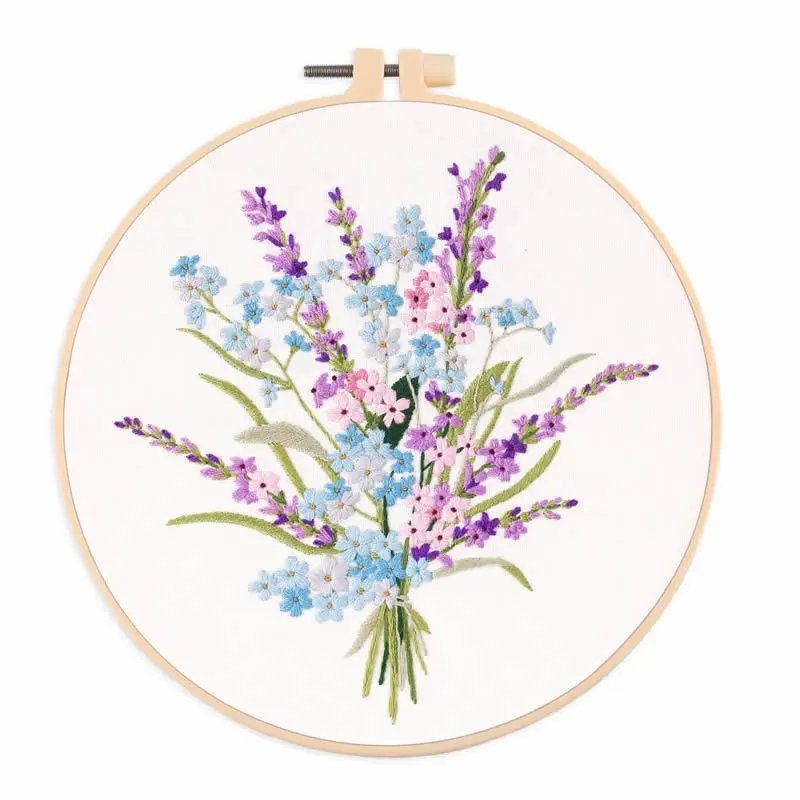
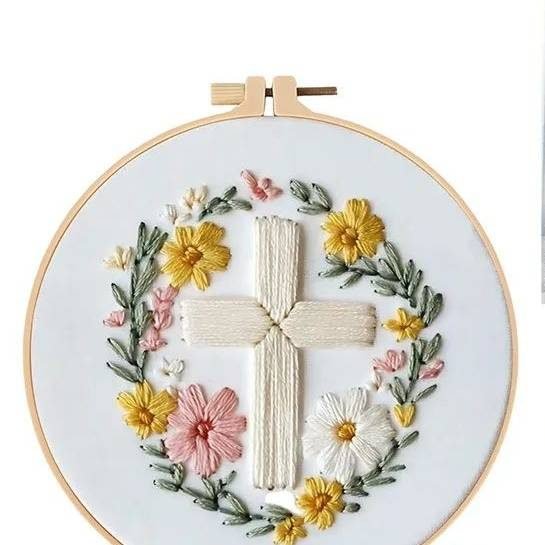
For calm, you want blocks of colour, few thread changes, and a chart you do not have to concentrate hard on. Florals are ideal — the floral kits and something like the wildflower bouquet kit or the floral cross kit fit perfectly.
What you do not want is a complex piece with sixty colours. That is an absorbing hobby, and absorbing is good, but it is not restful. Keep the ambitious things for when you have the capacity for them.
The part I have to say plainly
This is not treatment. If anxiety is affecting your sleep, your work or your relationships, please talk to your GP — the NHS mental health pages set out what is available and how to get it.
Mind, the mental health charity, also publishes practical guidance on managing anxiety Mind.
A hobby sits alongside those things. It does not replace them, and anybody telling you otherwise is selling something.
When it does not help
Two situations, both worth naming.
If you are the sort of person who turns a hobby into a performance — a deadline, a standard, a thing to be behind on — cross stitch will become another source of pressure. Watch for that. There is no deadline. Nobody is waiting.
And on very bad days, fine motor work can be frustrating rather than soothing. Put it down. It will still be there.
Starting
Buy something small and finish it. That is the whole plan. Anything from small kits will do, and there is no shame in a printed design if counting itself is the stressful part.
The beginner's guide covers your first stitch, and the wellbeing pillar guide goes deeper into why the craft does what it does. If you want the shopping side, beginner and starter kits is the place to look.
The short version
- Stitching occupies your hands and just enough attention that anxious rumination has no room to run.
- Predictable repetition and visible progress are the two things doing the work.
- Twenty minutes a day is enough. Keep a small kit permanently out so there is nothing to set up.
- Choose blocks of colour and few thread changes for calm; save complex pieces for absorption, not rest.
- This is not treatment. If anxiety is affecting daily life, speak to your GP.
Frequently asked questions
Does cross stitch actually help with anxiety?
Many people find it does, because it occupies the hands and enough attention that rumination has less room to run. The repetition is predictable and progress is visible. It is a useful supportive habit rather than a treatment, and should sit alongside proper support.
How long should I stitch for it to help?
Twenty minutes is enough to notice a difference, and short sessions are far easier to keep up than long ones. Consistency matters more than duration. Keeping a small kit somewhere you can pick it up without any setting up removes the main excuse to skip it.
What kind of kit is most relaxing to stitch?
Blocks of colour, few thread changes and a chart you do not have to concentrate hard on. Florals and simple animals suit this best. A design with sixty scattered colours is absorbing rather than restful, which is a different thing entirely.
Can cross stitch replace therapy or medication?
No. It is a helpful habit, not a treatment. If anxiety is affecting your sleep, work or relationships, speak to your GP about what support is available. A craft can sit alongside proper care very well, but it cannot stand in for it.
What if stitching makes me feel worse?
Put it down. On difficult days fine motor work can frustrate rather than soothe, and if you find yourself treating the project as a deadline you are behind on, it has stopped doing its job. There is no schedule and nobody is waiting.