Quick answer: A good wind-down activity is dull, finite and low-stimulation. Stitching qualifies if you choose the right project: simple, repetitive, few colours. What ruins it is picking something absorbing enough to keep you up, which is a real risk with a kit you are enjoying.
I am wary of hobby-as-medicine claims, so let me be careful about what I am actually saying here.
I am not saying stitching cures insomnia. I am saying it makes a better last hour than a phone does, and that the reason is fairly ordinary.
What a wind-down needs to be
Three things, and stitching can be all three.
Dull. Not unpleasant — undemanding. Something that does not deliver surprises.
Finite. It has a natural stopping point. Scrolling famously does not, which is the design.
Low-light-friendly. Bright screens close to your face are the specific problem, not screens in general. The NHS covers the practical side of sleep hygiene properly NHS sleep advice.
The catch, and it is a real one
Stitching can absolutely keep you up.
Anyone who has said "just this one row" at half past eleven knows exactly what I mean. A project you are enjoying is not a wind-down, it is an activity.
So the choice of kit matters more than the habit does.
What to stitch before bed
- Few colours. Every thread change is a small decision, and decisions wake you up.
- Blocks, not confetti. Repetition is the point.
- Small. A mini kit that you cannot get lost in for two hours.
- Something you have already started, so there is no setting up.
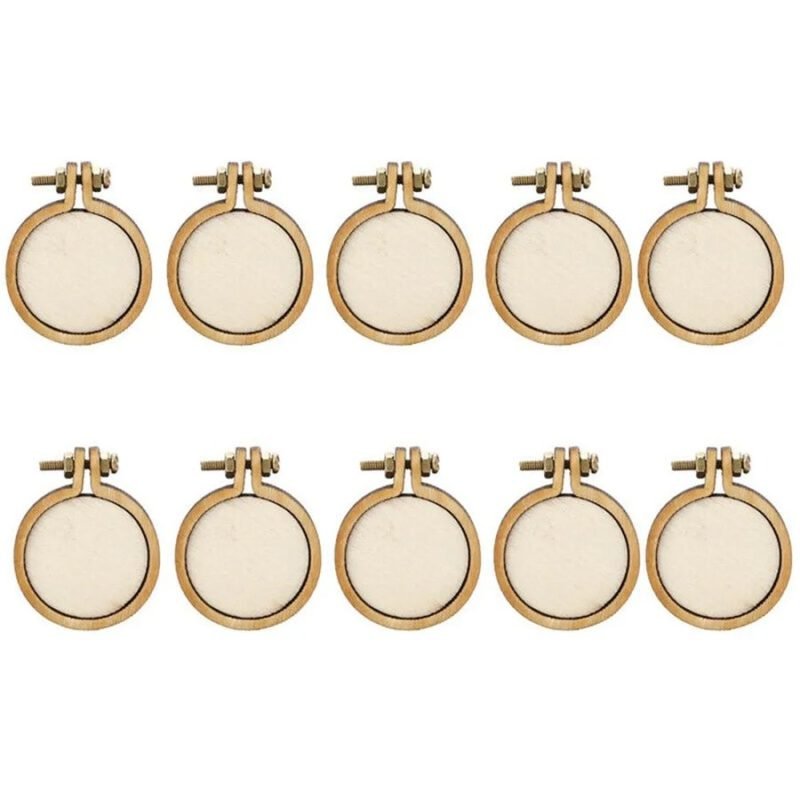
The mini hoops are handy for keeping a few tiny pieces going at once. The floral cross kit is about the right scale, and florals generally suit this because they need so little concentration.
What not to stitch before bed
Anything with lettering. Counting letters is precisely the kind of alert, checking attention you are trying to wind down out of.
Anything new. The first hour of a kit involves sorting threads and finding the centre — that is a project, not a rest, as the first hour guide makes clear.
And nothing you are behind on. A deadline piece for a birthday next week is a source of pressure, not calm. Commission work belongs to daytime.
Practical set-up
Good light on the work and low light in the room. A directed lamp on the fabric means you are not straining, without lighting the whole room like a kitchen.
Sit somewhere you are not going to seize up. Neck and shoulders are where stitching goes wrong for people, especially with the head tipped down.
Set a rough finish time. Not an alarm, just a decision — "to the end of this block" works better than "for twenty minutes".
Being straight about it
This is a habit, not a treatment. If you are lying awake regularly, that is worth a conversation with a GP rather than a craft purchase, and the same caveat applies to everything in this area.
What stitching does reliably is give the last hour of the day a shape. That is a genuinely useful thing, and it is enough on its own.
If you want to start, easy kits and simple starters are the right shelves, and the wellbeing guide goes further into the why.
The short version
- A wind-down should be dull, finite and comfortable in low light. Stitching can be all three.
- The wrong kit will keep you up - an absorbing project is an activity, not a rest.
- Choose few colours, solid blocks, small scale, and something already set up.
- Avoid lettering, brand new kits and anything you are behind on.
- Light the work, not the room, and decide a stopping point before you start.
Frequently asked questions
Is cross stitch a good activity before bed?
It can be, if the project is undemanding. A good wind-down is dull, finite and comfortable in low light, and simple repetitive stitching meets all three. An absorbing multi-colour piece does the opposite and will happily keep you up past midnight.
What kind of kit is best for evening stitching?
Small, with few colours and solid blocks rather than scattered single stitches, and ideally one you have already started so there is no setting up. Florals suit this particularly well because they need very little concentration to work on.
What should I avoid stitching late at night?
Lettering, because counting letters demands exactly the alert checking attention you are trying to wind down from. Also avoid brand new kits, which need thread sorting and centring, and anything with a deadline attached to it.
Does stitching help with insomnia?
It is a habit rather than a treatment, and it should not be presented as more than that. What it reliably does is give the last hour of the day a shape. If you are lying awake regularly, that is worth discussing with a GP.
How should I light my stitching in the evening?
Put good light on the work itself rather than lighting the whole room. A directed lamp on the fabric means you are not straining to see, while the room stays dim enough that the setting still reads as evening rather than daytime.