Quick answer: Start with something under about fifteen centimetres square that you could finish in three or four evenings. Small kits teach you every skill a big one does, but they hand you a finished piece before your enthusiasm runs out. Size is the single biggest reason first projects get abandoned.
I have watched a lot of people start cross stitch. Thirty-odd years of it in a classroom, and a Thursday circle in the church hall since I retired. And the pattern almost never changes.
The ones who finish started small. The ones who didn't bought something beautiful and enormous.
So let me be plain about it. Size matters more than subject, more than fabric, more than anything else you will read about choosing a first kit.
Why small kits work and big ones don't
A large kit is not harder. That is the thing people get wrong. Every stitch in a huge design is exactly the same stitch as the one in a tiny design.
What a large kit is, is longer. And length is where beginners come unstuck, because you are asking someone to enjoy a hobby for forty hours before they get to feel proud of anything.
A small piece gives you that feeling in a week. Then you want another one. That is the whole trick, and our small kits and mini kits exist for exactly that reason.
What "small" actually means
Here is roughly how the sizes shake out, and how long each tends to take somebody new working an hour or two a few evenings a week.
| Stitched size | What it suits | Rough first-timer pace |
|---|---|---|
| Up to 8cm | Cards, bookmarks, keyrings | An evening or two |
| 8-15cm | A hoop for the wall, a first proper project | Three or four evenings |
| 15-25cm | Second or third project | A few weeks |
| 25cm and up | Once you know you love it | Months |
Those paces are honest ranges, not promises. Everyone is slow at first and everyone speeds up, usually faster than they expect.
If you want the tiniest possible commitment, a bookmark kit or a card kit is a genuinely good first go. You will have something finished by Sunday.
The other thing that decides length
Two kits can be the same size and take wildly different amounts of time. What separates them is how many colours are crammed in.
A design with eight colours in clean blocks flies along. A design with sixty colours scattered a stitch at a time — stitchers call it confetti — crawls, because you are rethreading constantly.
So check the thread count on the box, not just the dimensions. Our easy kits and simple starters are picked with that in mind.
A concession, because it matters
If you have a large kit sitting in a bag already, I am not telling you to bin it. Plenty of people have started with a monster and got through it on sheer stubbornness.
But do yourself a kindness and buy a small one to run alongside it. Stitch the little thing when your patience is thin. Come back to the big one when it isn't.
And if the big one is genuinely huge, learn the parking method before you start rather than three thousand stitches in.
What to actually buy first
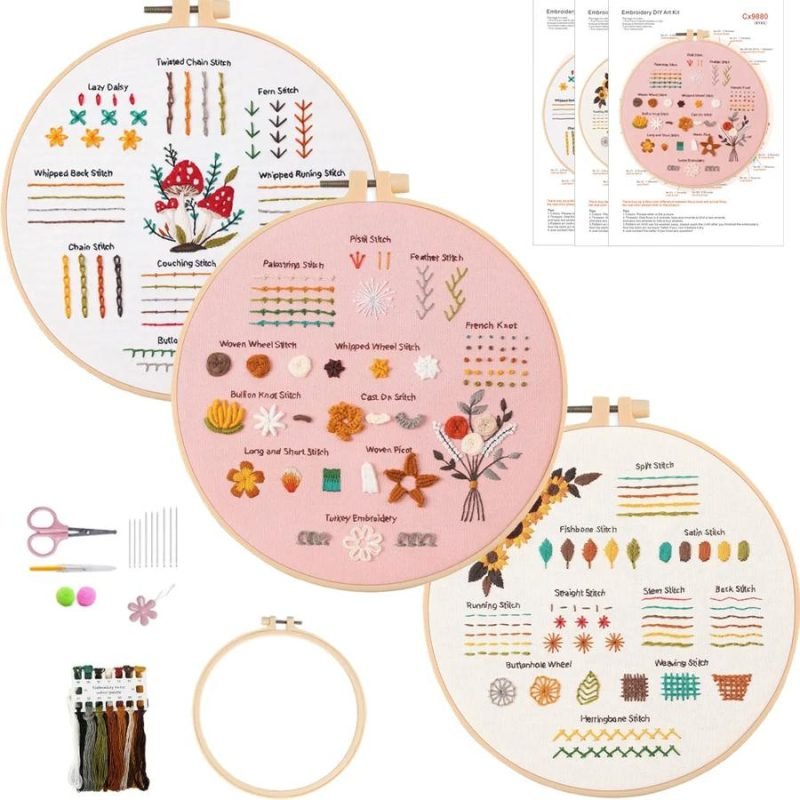
My usual recommendation is a complete kit on 14-count aida with everything in the box. The beginner starter kit with three hoops is the one I hand people most often, because three small projects means three chances to feel clever.
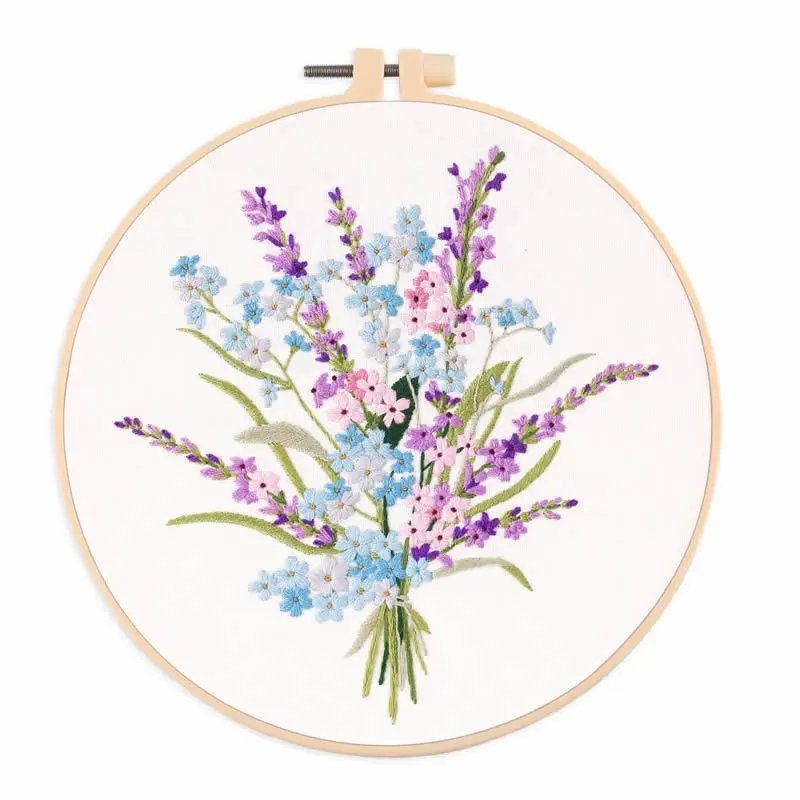
If you would rather one pretty thing than three small ones, the wildflower bouquet kit is forgiving and looks a treat in a hoop.
You can browse the whole beginner and starter range, and the best beginner kits guide goes through the checklist I use.
Before you order
Read the stitched size, not the fabric size. Kits include a margin of spare fabric for framing, so a 30cm piece of aida might carry a 12cm design.
If you are unsure, the complete beginner's guide walks through your first stitch, and the supplies guide covers what you would need if you ever buy fabric and threads separately.
Start small. Finish it. Hang it somewhere you walk past. That is how this hobby gets its hooks in.
The short version
- Size, not difficulty, is why most first cross stitch projects get abandoned.
- Aim for a stitched design under about 15cm - three or four evenings' work.
- Check the number of colours as well as the dimensions; confetti designs take far longer.
- Kit boxes quote fabric size, which is bigger than the stitched size. Read carefully.
- If you already own a large kit, buy a small one to run alongside it rather than abandoning either.
Frequently asked questions
What size cross stitch kit is best for a complete beginner?
A stitched design under about fifteen centimetres square. That is roughly three or four evenings of work for somebody new, which is short enough to finish before enthusiasm fades but long enough to teach you tension, counting and thread changes properly.
Is a bigger cross stitch kit harder to stitch?
Not harder, just longer. Every stitch in a large design is identical to a stitch in a small one. What changes is the hours involved and how much counting you must keep track of, which is where beginners tend to lose heart rather than lose skill.
How do I know how long a kit will take?
Look at two numbers: the stitched dimensions and the number of thread colours. A small design with eight colours in solid blocks moves quickly. A same-sized design with sixty colours scattered singly takes far longer, because you spend the time rethreading.
Why is the fabric bigger than the design in my kit?
Kits include a margin of spare aida all the way round so the finished piece can be hooped, mounted or framed without cutting into your stitching. Expect several centimetres of blank fabric on every side. The stitched size is the number that matters.
Should I buy a small kit if I already have a large one?
Yes, and run them together. Stitch the small one on evenings when your patience is short and the large one when it is not. Having something close to finished keeps the momentum going, which is most of the battle on a long project.