Quick answer: Puckering is almost always tension, not faulty fabric. You are pulling each stitch tight instead of laying it down. Loosen your pull until the thread just sits flat, keep the fabric drum-taut in a hoop, and wash and block the finished piece. Most rippling disappears completely in the wash.
I took this up at sixty, so I have made every mistake going, usually twice. Puckering was my first proper one.
Three weeks into my first kit the fabric looked like a crisp packet. I assumed the aida was cheap. It wasn't. It was me.
What puckering actually is
Every time you pull a stitch tight, you drag a tiny bit of fabric with it. Do that a few thousand times and the whole cloth gathers.
The stitches are not too big. The fabric is not too thin. You are simply pulling.
Here's the thing — it feels productive to pull. Tight stitches look neat as you make them. The damage only shows up when you step back.
The fix, while you stitch
Pull until the thread lies flat against the fabric, then stop. That is the whole instruction.
The stitch should sit on the cloth, not sink into it. If you can see a dimple around the hole, you have gone too far.
It feels far too loose for the first hour. Give it that hour. Your hands recalibrate faster than you would think, and the techniques guide covers the same principle for backstitch and French knots.
Use the hoop properly
A hoop is not decoration. Taut fabric cannot gather, because there is nowhere for it to go.
Get it drum-tight. Tighten the screw, tug the edges evenly all the way round, tighten again. Re-tension every twenty minutes or so, because it slackens as you work.
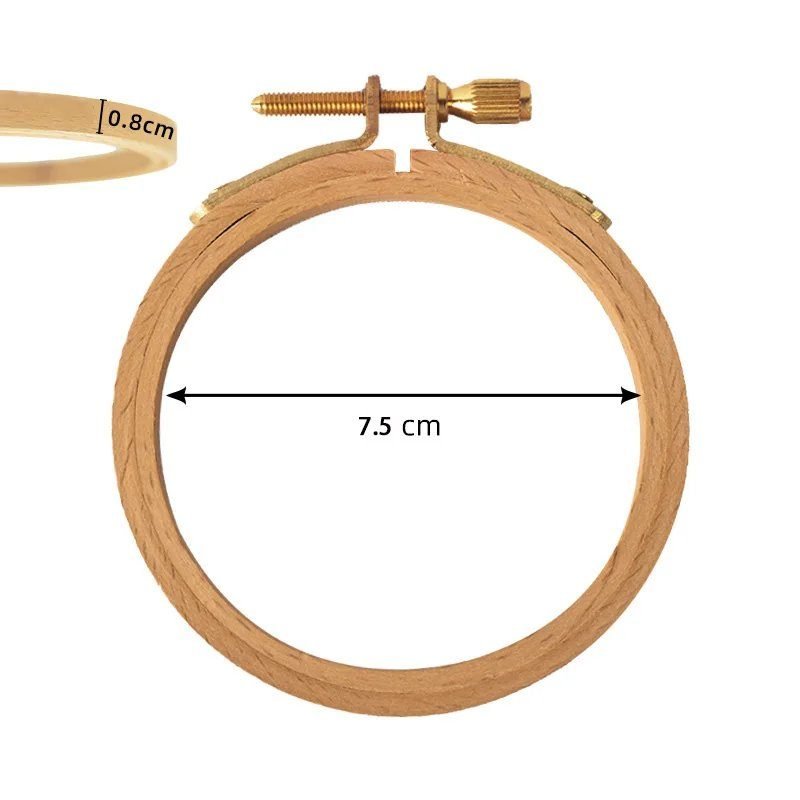
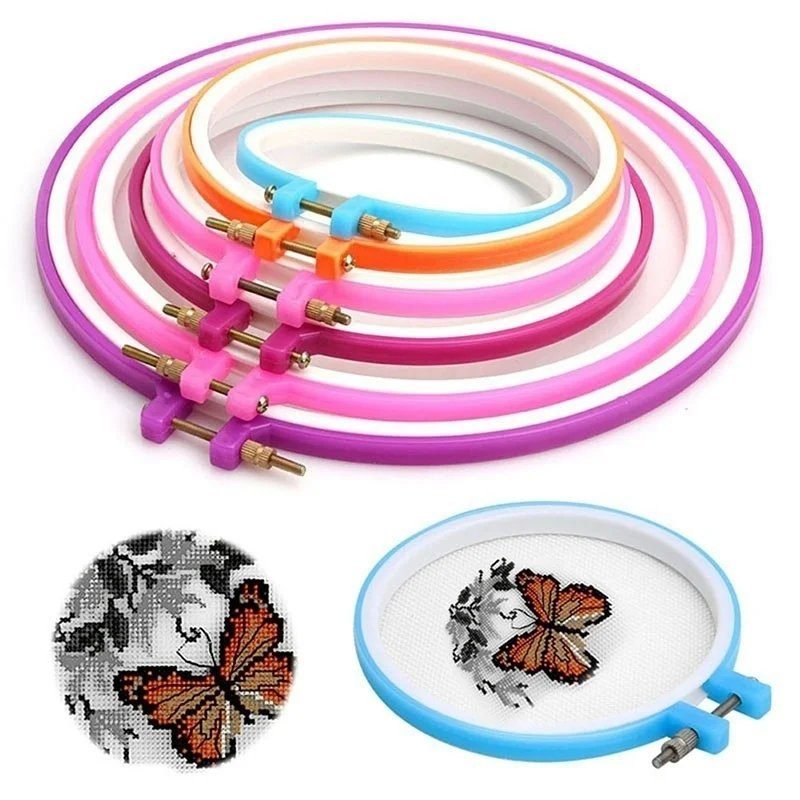
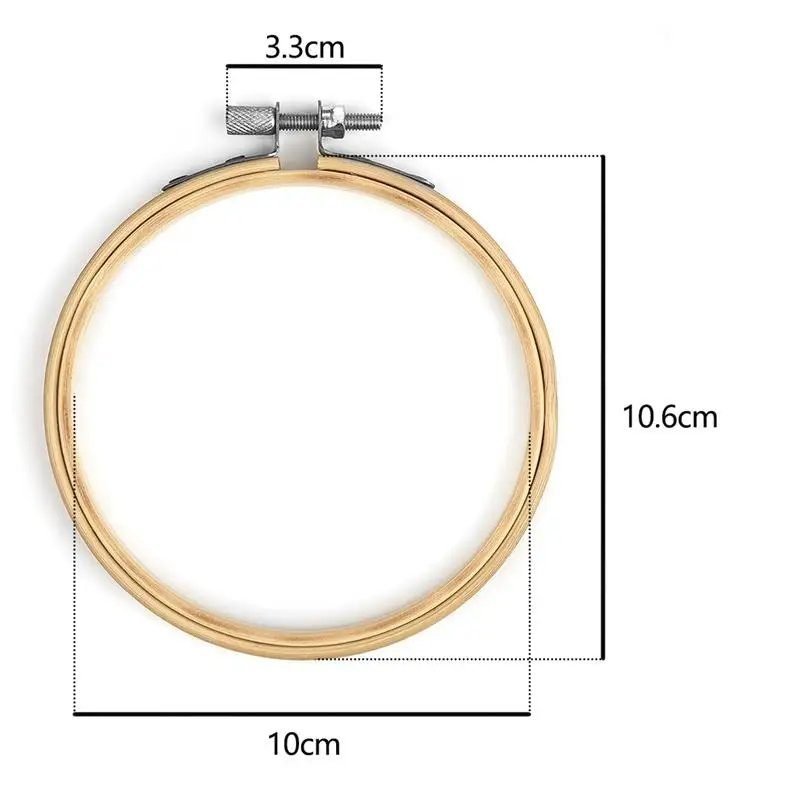
A wooden hoop grips better than plastic once the fabric has been in it a while. The beech hoop set is what I use, though the plastic five-size set is fine and lighter in the hand. There is a fuller range in needles, hoops and frames.
Move the hoop off finished work
One nobody tells you. Leaving a hoop clamped over stitched areas for weeks crushes them and leaves a ring.
Take the fabric out when you stop for the night. It takes ten seconds and saves an argument with an iron later.
If your piece is genuinely large, a scroll frame beats a hoop, and the parking method pairs well with one.
Blame the thread occasionally
Long lengths tangle and twist, and a twisted thread pulls unevenly. Work with about 45cm at a time.
Let the needle dangle every so often and the thread will unwind itself. Poor-quality floss with an inconsistent twist also puckers more, which is a decent argument for sticking to proper stranded cotton rather than whatever is in the bottom of the drawer.
Fixing a piece that has already gone
Good news, and it surprises people. Most puckering washes out.
Hand-wash in cool water with a little mild detergent, rinse, roll in a towel to take the worst of the water out, then lay it flat and pull it gently square. Let it dry that way.
Press face-down on a towel so you do not flatten the stitches. Full detail is in the finishing and framing guide.
Severe puckering, where the fabric has genuinely distorted, may not come all the way out. Blocking it damp and pinned square will get you most of the way.
Be honest about one thing
If it is your first kit and it ripples a bit, that is fine. Wash it, frame it, hang it up.
Nobody looking at it will see what you see. Start something small from the small kits or easy kits range with your new looser hand and watch the difference. The FAQ guide covers the other common gremlins.
The short version
- Puckering is pulled tension, not cheap fabric. Lay each stitch flat instead of pulling it tight.
- Keep the hoop drum-taut and re-tension it every twenty minutes or so.
- Take the fabric out of the hoop between sessions so stitched areas are not crushed.
- Work with about 45cm of thread and let the needle dangle to untwist it.
- Most puckering comes out in a cool hand-wash followed by blocking flat and square.
Frequently asked questions
Why is my cross stitch fabric puckering?
Almost always because each stitch is being pulled tight rather than laid flat. Every pull drags a fraction of fabric with it, and thousands of those add up to visible rippling. Slack fabric in the hoop and twisted thread both make it worse.
How tight should a cross stitch be?
Just tight enough that the thread lies flat against the fabric with no slack loop, and no tighter. If you can see the fabric dimpling around the hole, you have pulled too far. It will feel uncomfortably loose for about an hour, then normal.
Can I fix puckering after finishing a piece?
Usually, yes. Hand-wash in cool water with mild detergent, roll in a towel, then lay flat and ease the piece square while damp. Let it dry that way and press face-down on a towel. Most rippling disappears entirely.
Does using a hoop stop puckering?
It helps a great deal, provided the fabric is drum-taut. Slack fabric in a hoop gathers as readily as fabric held in the hand. Tighten the screw, tug the edges evenly, tighten again, and re-tension regularly as the fabric relaxes.
Should I leave my work in the hoop between sessions?
No. A hoop clamped over stitched areas for days or weeks crushes the stitches and leaves a visible ring that is a nuisance to press out. Slip the fabric out when you finish for the evening and re-hoop when you next sit down.