Quick answer: Cross stitch is one type of embroidery: a single X-shaped stitch counted onto evenly woven fabric from a chart. Embroidery more broadly means any decorative needlework, using many different stitches worked freehand on plain cloth. Cross stitch is the easier of the two to start, because there is only one stitch to learn.
Thirty years of teaching needlework and this is still the question I was asked most on the first evening of any class. Someone would arrive with a kit, hold it up, and ask whether they had bought the right thing.
The honest answer is that they had - because cross stitch is embroidery. It is one stitch out of the several hundred that embroidery covers. But that answer is not much use when you are stood in front of two shelves trying to work out which one you want, so let me give you the useful version.
The short answer
Cross stitch is counted embroidery worked in one repeated X-shaped stitch on evenly woven fabric. Embroidery, taken broadly, is any decorative needlework - dozens of stitch types, worked freely, usually on plain cloth with the design drawn or printed on.
One is a grid. The other is a drawing.
What actually differs on the table in front of you
| Cross stitch | Surface embroidery | |
|---|---|---|
| Fabric | Aida or evenweave, with countable holes | Cotton, linen or twill - no grid needed |
| How you place a stitch | Count squares from a chart | Follow a printed or traced line |
| Stitches used | Full cross, plus backstitch and fractionals | Satin, stem, chain, French knot, lazy daisy and more |
| Result | Even, pixel-like, very regular | Painterly, textured, more freehand |
| Room for error | Miscount and it shows | A wobbly line usually reads as style |
Which is easier to learn?
Cross stitch, for most people, and the reason is not the stitch itself.
It is that cross stitch only asks you to learn one movement. Up, across, down, and you have an X. Repeat it a few thousand times and you have a finished piece. The skill you are building is counting accurately, not manual dexterity.
Embroidery asks you to learn six or eight stitches before your first project looks like anything, and each one has its own tension and rhythm. That is not harder in a deep sense - it is just more to hold in your head on night one.
Which is why our beginner and starter kits are almost all cross stitch, and why a complete first-timer usually gets further, faster, with a chart than with a sampler of stitches.
So why does our shop sell both?
Because they suit different evenings and different people, and a fair number of stitchers end up doing both.
- You want something restful and repetitive, with visible progress - cross stitch kits.
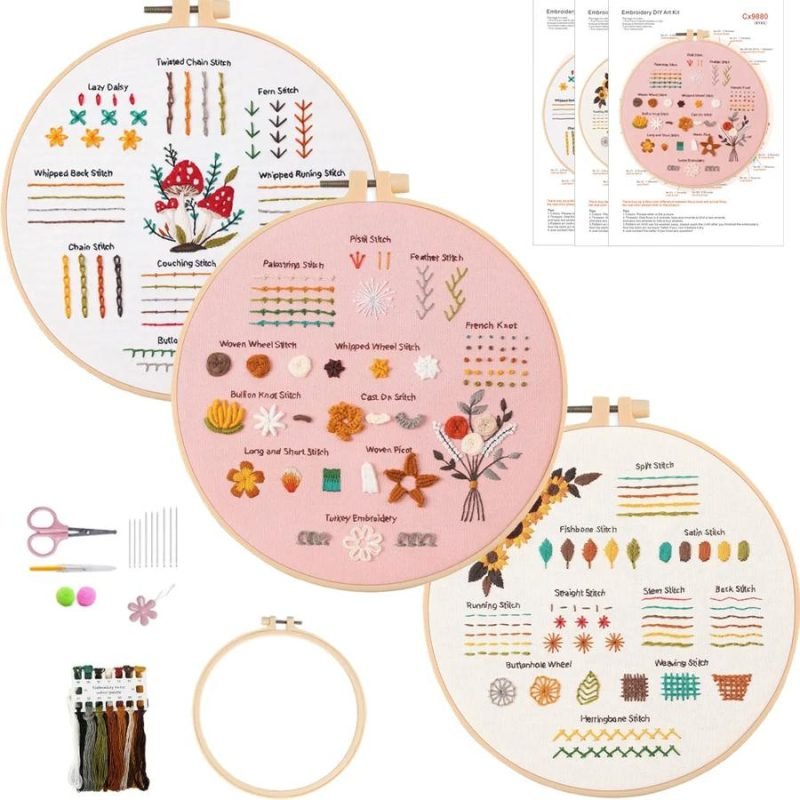
- You want to learn several stitches and build texture - tapestry and embroidery kits.
- You do not want to count at all - printed and stamped kits, where the design is already on the cloth.
- You are buying for a child - kids' kits, on a lower fabric count with a blunt needle.
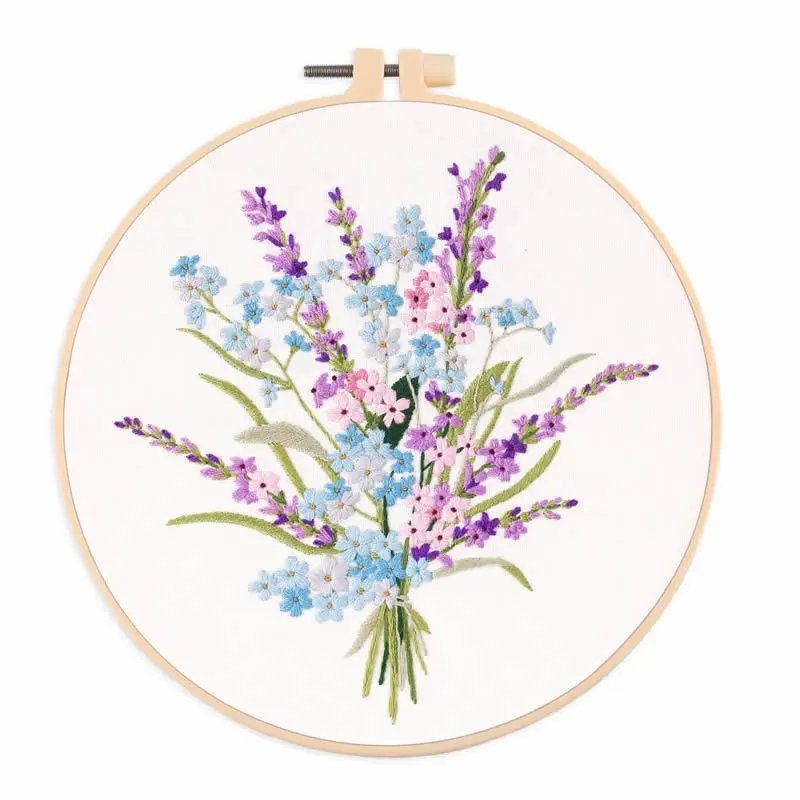
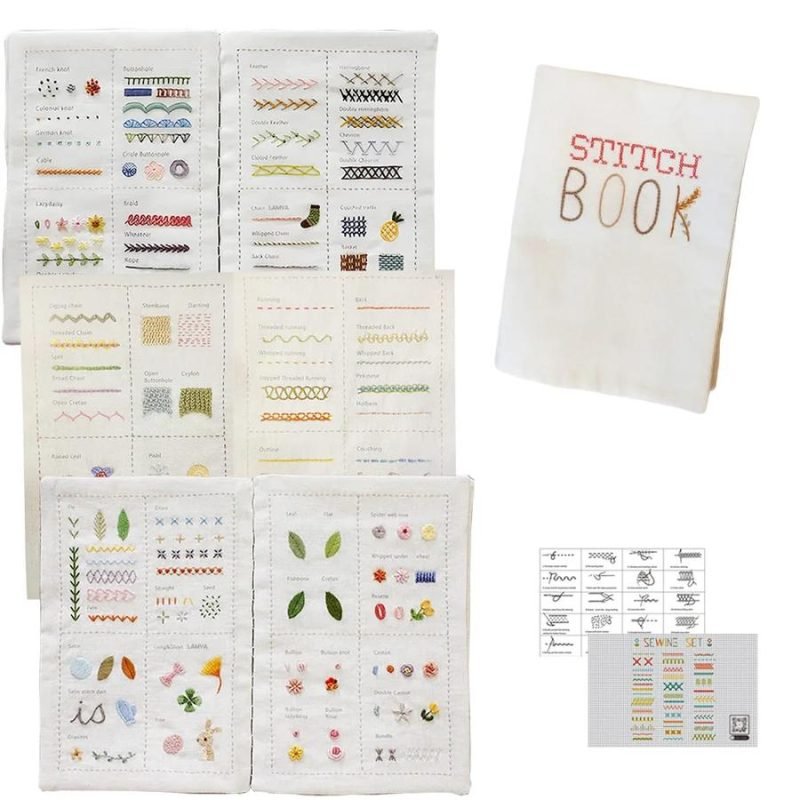
The embroidery stitch book kit is the one I hand people who want to try surface embroidery properly - it teaches the stitches one page at a time rather than throwing a whole picture at you. For the cross stitch side, the wildflower bouquet kit is the gentlest start.
Do they use the same materials?
Largely, yes, and that is worth knowing before you buy twice.
The same six-stranded cotton floss works for both. The same hoops and frames hold either. What changes is the fabric and the needle.
- Fabric. Cross stitch wants aida or evenweave, with a visible grid. Embroidery wants a closer weave with no holes to follow.
- Needle. Cross stitch uses a blunt tapestry needle that finds the hole. Embroidery uses a sharp needle that makes its own.
- Strands. Two strands on 14 count is standard for cross stitch; embroidery varies the strand count deliberately to change the weight of a line.
So a box of threads and floss serves both hobbies. The needle packet does not - that is the one thing people get caught by.
Is cross stitch really embroidery?
It is, and I would gently push back on anyone who suggests otherwise. Counted work has been done in Britain for centuries - the sampler tradition is exactly this, and museum collections are full of them, worked by girls learning their letters in thread. The Royal School of Needlework has taught counted and free embroidery side by side since 1872 Royal School of Needlework.
There is no hierarchy here. There are only techniques, and the one you enjoy is the one worth doing.
Which should you actually buy?
If you have never held a needle: a complete cross stitch kit on 14 count, small, with a subject you like. You will have something finished within a fortnight, and finishing the first one is what decides whether you carry on.
If you have stitched before and want a change of pace: an embroidery hoop kit. Different rhythm, more texture, and it will make you better at both.
If the counting is what is putting you off: a printed kit, and no apology needed. Our counted versus stamped guide goes into that choice in more detail, and the beginner's guide covers your first stitch either way.
And if you are stuck between two, send us a message. We would rather point you at the right one than have you guess.
The short version
- Cross stitch is a type of embroidery, not a rival to it - one stitch out of hundreds.
- Cross stitch counts squares on gridded aida; embroidery follows drawn lines on plain cloth.
- Cross stitch is easier to start because there is only one stitch to learn.
- Threads and hoops serve both. Fabric and needle are what differ - blunt for one, sharp for the other.
- Choose cross stitch for restful repetition, embroidery for texture and variety.
Frequently asked questions
Is cross stitch the same as embroidery?
Cross stitch is a type of embroidery. Embroidery is the umbrella term for decorative needlework of any kind; cross stitch is the counted form of it, worked in one repeated X-shaped stitch on evenly woven fabric. So every cross stitch piece is embroidery, but most embroidery is not cross stitch.
Which is easier for a beginner, cross stitch or embroidery?
Cross stitch, for most people. It asks you to learn one stitch and then repeat it, so the only real skill is counting accurately. Surface embroidery asks you to learn six or eight different stitches before a first piece looks finished.
Can I use the same threads for cross stitch and embroidery?
Yes. Standard six-stranded cotton floss works for both, and the same hoops hold either. What you must change is the fabric and the needle: cross stitch needs gridded aida and a blunt tapestry needle, embroidery needs a closer weave and a sharp needle.
Do I need a chart for embroidery?
No. Surface embroidery normally has the design printed or traced onto the fabric, so you follow a visible line rather than counting from a chart. That is also how printed and stamped cross stitch kits work, which is why people often find them a gentler start.
Which lasts better, cross stitch or embroidery?
Both last for generations if finished properly. What matters is the finishing, not the technique: wash the piece in cool water, press it face-down so the stitches keep their texture, and mount it over acid-free board. Antique samplers survive because they were mounted well.