Quick answer: Highland cows suit cross stitch unusually well because that shaggy coat is forgiving. Long, irregular fringes hide small tension and counting errors that would show badly on a smooth surface. Look for a kit with plenty of related browns and creams rather than a handful of flat blocks of colour.
Every few years a subject takes hold and will not let go. When I started teaching it was cottage gardens. For a good while now it has been highland cows.
My Thursday circle currently has four on the go. Four, out of nine people.
So what is going on? Partly it is that they are lovely. But there is a craft reason too, and it is worth understanding before you buy.
Why a shaggy coat is a gift to a stitcher
Smooth subjects are unforgiving. A stitched swan or a still pond shows every unevenness, because your eye expects a clean gradient and spots any interruption.
A highland cow is the opposite. That coat is meant to look irregular. Long fringes falling every which way.
So a stitch that sits slightly proud, or a shade placed one square off, simply reads as more hair. The design absorbs your mistakes, which is a genuinely rare quality.
What to look for in the kit
The good ones give you a proper spread of related browns, gingers and creams. Six or seven close shades, not three flat ones.
That range is what makes the coat look like hair rather than a brown blob. If the thread list is short, the finished piece will look flat however well you stitch it.
Check for backstitch in the chart too. The muzzle, the horns and the eyes usually need outlining to stop the whole face dissolving into fringe.
Where it sits for difficulty
Middling, and honestly a touch harder than it looks. Blending several close shades means more thread changes than a beginner design.
If it is your very first project I would steer you to something in easy kits first, then come back. If it is your second or third, go for it.
You can browse the highland cow kits directly, and the wider animal kits range if a different beast appeals.
Other animals with the same forgiving quality
Once you know to look for texture, you spot it everywhere.
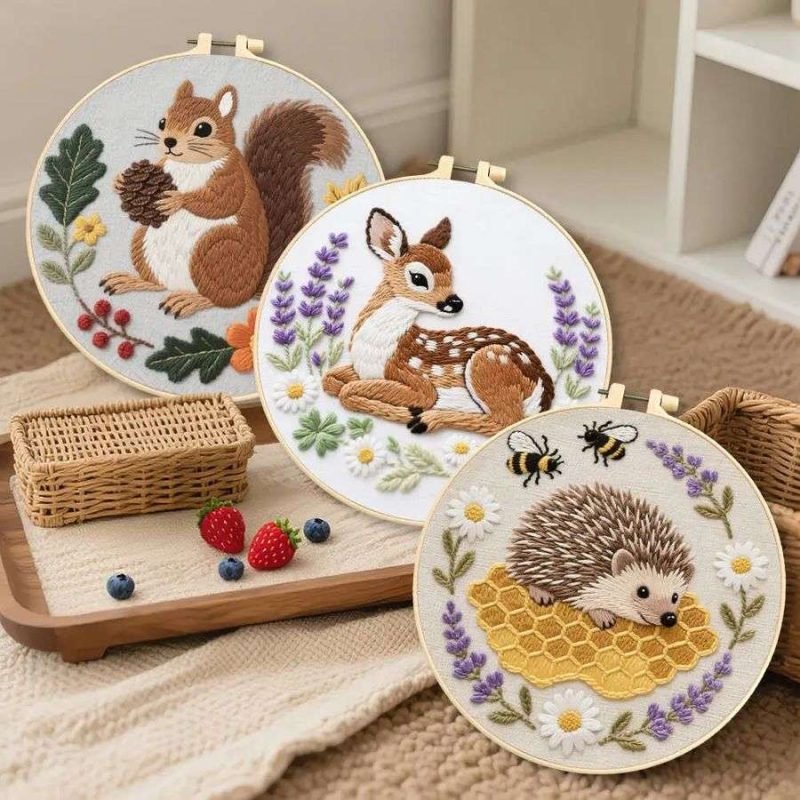
- Woodland creatures — foxes, hares, hedgehogs. The woodland animals kit is a good example.
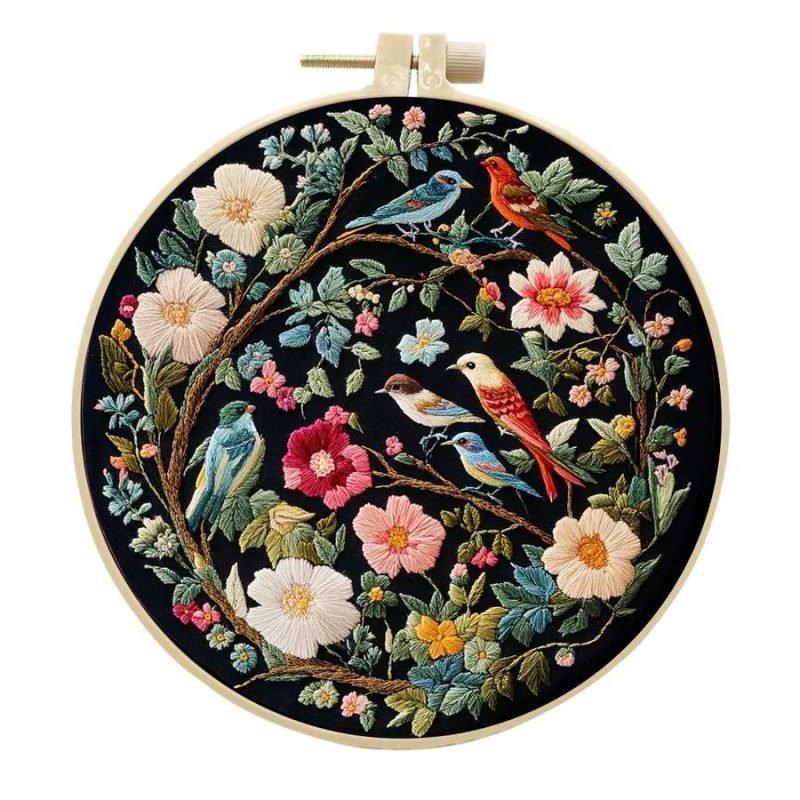
- Garden birds, where feather detail hides a lot. The garden birds kit works the same way, and there are more in birds and robins.
- Long-haired cats, which is part of why cat kits stay so popular.
- Sheep, which are essentially highland cows with a different haircut.
Smooth-coated animals — horses, greyhounds, elephants — need more care. Lovely, but less forgiving. There are plenty in elephants and wildlife if you fancy the challenge.
Two honest cautions
First, highland cows have been stitched a great deal. If you want something nobody else on your street has, this is not it. That may not bother you at all.
Second, and this is a real one — a highland cow badly done looks muddy. Get the shading wrong and it is a brown smudge with horns.
The fix is not skill, it is thread. Do not substitute two of the browns for one because you have run short. Keep the range. The threads and floss range covers you if a kit leaves you short.
Finishing one
They look tremendous in a plain wooden hoop. The circle suits the face, and it costs a fraction of framing.
Our beech hoop set works for that, and the framing guide walks through mounting it neatly. If you would rather see the whole spread of subjects first, the kits by theme guide is the place to start.
The short version
- A highland cow's shaggy coat hides small tension and counting errors that would show on a smooth subject.
- Look for six or seven close browns and creams, not three flat blocks of colour.
- Check the chart includes backstitch for the muzzle, horns and eyes.
- It is a middling-difficulty subject, better as a second or third project than a first.
- Never substitute two shades for one to save thread - that is what makes a cow look muddy.
Frequently asked questions
Are highland cow cross stitch kits good for beginners?
They are forgiving to stitch but involve a lot of thread changes, because the coat needs several close shades blended together. If it is your very first project, start with something simpler. As a second or third kit a highland cow is an excellent choice.
Why do highland cows suit cross stitch so well?
Because the coat is meant to look irregular. A stitch that sits slightly proud, or a shade placed a square out, simply reads as another strand of hair. Smooth subjects such as horses or still water show every unevenness instead.
How many thread colours should a highland cow kit have?
Look for six or seven closely related browns, gingers and creams at minimum. That range is what makes the coat read as hair rather than a flat brown shape. A short thread list is the clearest warning sign of a disappointing finished piece.
What if I run out of one of the browns?
Match it rather than substituting a shade you already have. Dropping from seven browns to six flattens the coat noticeably and is the usual reason a finished cow looks muddy. Our threads and floss range will get you close on most standard shades.
What is the best way to display a finished highland cow?
A plain wooden hoop suits the round face very well and costs far less than framing. Trim the fabric to a few centimetres beyond the hoop, run a gathering stitch round the edge and pull it tight at the back.